Alps at the Crossroads: Green Utopia or Developers Paradise ?

It all looked great; a traditional apartment in the alpine village of Oberjoch, located at 1200m in the Eastern Allgaü region of Bavaria and close to the beautiful Tannheimer Valley in neighbouring Tyrol.

IMG_6803

With Germanic diligence I scanned the latest version of Google satellite maps for any items on my list of potential eyesores (including overhead transmission wires, new sewerage installations or shopping mall developments) which could detract from our holiday experience.  Reassuringly, the “Google” search drew a blank; the images revealed that our chosen holiday apartment was, in fact, in a quiet location on the edge of the village and overlooking a pristine alpine meadow. Rest assured, I cheerfully clicked the “book accommodation” icon, confident in our choice.

A couple of weeks later, Google (most inconveniently) made one of their (all too few and far between) satellite imagery updates. Next time I clicked on Google Maps I was horrified to find, not a pristine meadow, but, in its place, a major new resort hotel development.

Research revealed this to be the swanky new “Hotel Panorama”, a five-star “wellness” and spar development offering “wellbeing” and relaxation benefits for wealthy guests at 5 Star prices. Unsurprisingly, it appeared that the development had not just sprung out of thin air during the intervening 2 weeks since we had made our booking; it had in fact already been in business for three years or so.

IMG_6834

This revelation drew me to two conclusions;

i) resort based tourism is bringing about rapid changes to alpine communities and landscapes and…

ii) never believe that what you see on Google Maps represents an accurate reflection of the present state of things.

We talked about cancelling our holiday apartment, in favour of finding another “pristine” meadow location far from the madding “wellness” crowds; in the end however (and following much debate) we opted to stick with our original plan come hell or high water.

Over the following weeks, I started to ponder as to just what changes were occurring in Alpine communities like Oberjoch; just what was the “wellness” industry and why was type of development proving to be so popular ? How are such developments affecting the landscape, culture and social structure of the communities themselves ? Who are the winners and the losers ?  What about the relationships between tourism and traditional land management practices including farming and forestry ? Are there models of tourism which might be more sustainable in the longer term for local communities and landscapes ?

On the face of it, the situation seemed pretty simple; here was an example of developer lead big business screwing up yet another local community and marginalizing smaller family run tourism businesses and traditional guest houses – a purely parasitic relationship in line with the classic Walmart or Trump scenario. Like everything to do with communities however, nothing is ever quite so straight forward or clear cut as it initially appears. Dig a little deeper behind any local community and you start to find there are factions, local elites, power imbalances  and feuds that can sometimes go back for generations. You can encounter genuinely motivated people who care passionately about the future of their communities and others who are simply out to make a quick buck, regardless of the impact.

IMG_6833

The traditional tourism sector has not always helped itself or moved with the times. Inertia is often rife amongst traditional accommodation providers; many small businesses have basically been offering the same type of service for years and therefore see no reason to move on from what customers demanded (or put up with) in the 1970s (regardless of industry statistics or changing consumer demands).

In this respect the competition from new “resort style” developments inevitably brings change to small communities such as an influx of itinerant labour from other parts of Europe, reduction of guests using other types of accommodation and increased traffic congestion. Whilst some of these changes can be negative, there are also positive aspects. For a start the latest generation of “wellness resorts” are offering genuine customer service, which is sometimes in rather short supply in more traditional establishments. There are up to date facilities such as Wifi (that works), courteous staff with a customer service orientation, cheerful modern decor, “en suites” and enough parking spaces for everyone.

Traditional holiday apartments on the other hand, whilst offering a more “authentic” and individualistic visitor experience, can be plagued by their own idiosyncrasies and minor annoyances. Examples include terse notices about guests stealing cutlery, sitting-room sofa beds, intrusive landladies barging in unannounced to water balcony flowers, basic cooking facilities and additional charges for using the washing machine; anachronistic customs which should have long ago been banished into some distant past.

In short, competition created by new developments is a wake up call to the traditional tourism sector that they need to smarten up their act, move with the times and actually listen to what customers want. The generation of retirees who accepted the institution of the traditional holiday apartment is slowly dying off; the pensioners of today have more money and more choice and are moving upmarket. As for families; well it can be pretty hard to find holiday apartments offering more than one bedroom (back to the sitting room sofa bed scenario). Don’t get me wrong; my sympathies are entirely with the small businesses (small is beautiful after all), however these traditional family run businesses need to stop being complacent and move with the times rather than just assuming  that visitors with come as they have always done.
CIMG9392

The Wellness resort Industry:

Interested to learn more about the “wellness” industry, I did a bit of simple research. Forbes website informed me that investing in the Wellness Resort industry was currently a speculators paradise with virtually guaranteed returns on investment. Typically guests using such resorts tend to be in the more mature age groups; older professional couples, burned out executives or well healed pensioners who are concerned about preserving their “youthful” appearances a few years longer (but who themselves might frown at more intense, high-octane activities  such as mountain hikes, paragliding or downhill biking).

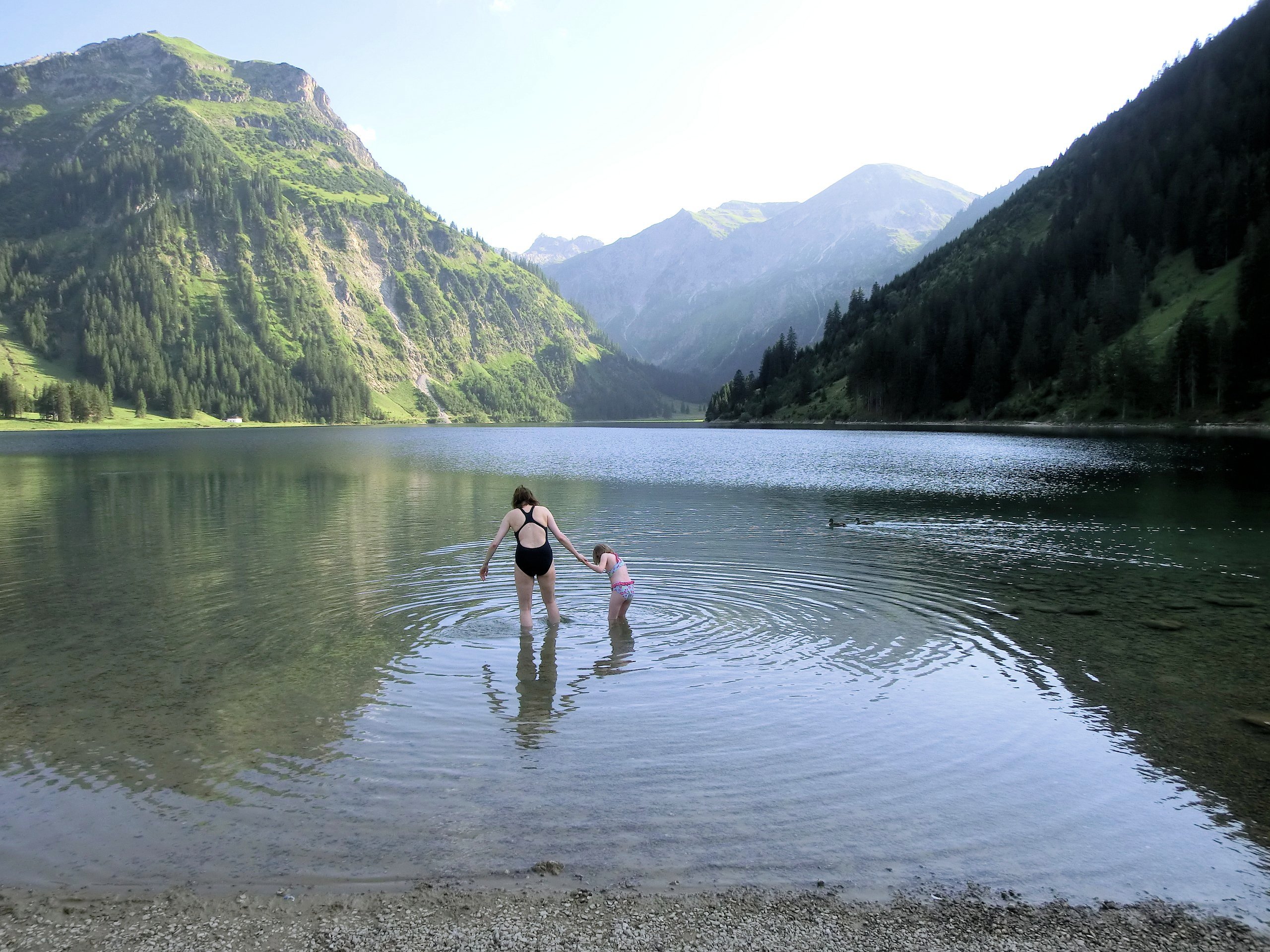
Visitors to wellness hotels spend much of their time in a bath robe walking from one pampering ritual to another. Such activities might include immersion in hay baths, placing of hot stones on the back, facial treatments, yoga or massage. The main point about these activities are that these are all processes which can be commoditized and charged for (preferably on company expense accounts). Activities which are free, such as swimming in fresh mountain lakes, hiking or picnicking in pristine meadows do not seem to fall within the jurisdiction of the wellness industry (at least not as primary activities) despite the obvious health and wellbeing benefits of these things.

So is wellness just a fad, like wearing red trousers or going vegan, which might fizzle out in a year or two ? From my perspective much of the rapid growth of wellness resorts can be attributed to a desire to “keep up with the Jones’s”. Rather like owning an SUV, it makes a statement that has less to do with functionality or health benefits  but more to do with image; it’s about being a member of an exclusive club and having status with friends and colleagues back home. Staying in a traditional holiday apartment, by contrast, with spotty kids or retired couples from Esson just doesn’t quite cut it with those who jostling to nail their colours onto the social mobility mast. The question is whether this fad will continue; certainly it shows no sign of abating at the present time and the wellness resort industry remains a safe option for investors looking for sure returns.

Developments in the Landscape:

Of concern to me is the physical impact that resort style developments (and some other ill-conceived pieces of infrastructure) are having on the alpine landscape. Changing styles of architecture for example are slowly starting to creep into the landscape with “barrack” type, boxy developments which appeal to current minimalistic trends, particularly amongst the Germans professional classes. I recently spoke to a German architect who told me he was concerned about the loss of local identity as the majority of his clients want him to design functionalist, concrete cube type dwellings; devoid of soul or local cultural context. In a rush to scoop up local taxes and boost inward investment, municipal planning authorities seem to push through such developments at the drop of a hat, with few questions being asked or suggestions for modifications.

IMG_6815

The result of this could be a case of “death by a thousand cuts” for treasured cultural landscapes. The characteristic vernacular architecture of the Bavarian Alps and neighbouring Tyrol is superb, with a strong emphasis on quality craftsmanship and use of timber as a construction material for dwellings and agricultural buildings. These usually sit perfectly within a backdrop of meadows, forests and mountains. Generally (though not always) timber is sourced locally from sustainably managed forests with processing work done in local mills. In short the indigenous culture of local building construction represents craftsmanship at its finest and is sustainable and eco-friendly.

At risk of sounding like Prince Charles, it seems to me to be obvious that if the people of the alpine region are to avoid “killing the goose that lays the golden egg”, they must endeavour to maintain their architectural traditions and styles as an integral component of new developments. Creeping, incongruous  construction has an erosive effect and results in a slow degradation of cultural integrity.

Resort-style developments are leading  to the urbanisation of rural villages, creating a very different atmosphere and visitor experience. One only has to visit the nearby Kleine Walsertal, an enclave of Austria (located down a cul-de-sac road South of Obersdorf ) to see how creeping proliferation of resort hotels, casinos and retail outlets is having a detrimental effect which is slowly changing an essentially a rural, alpine valley into a theme park for urban dwellers.

CIMG9595

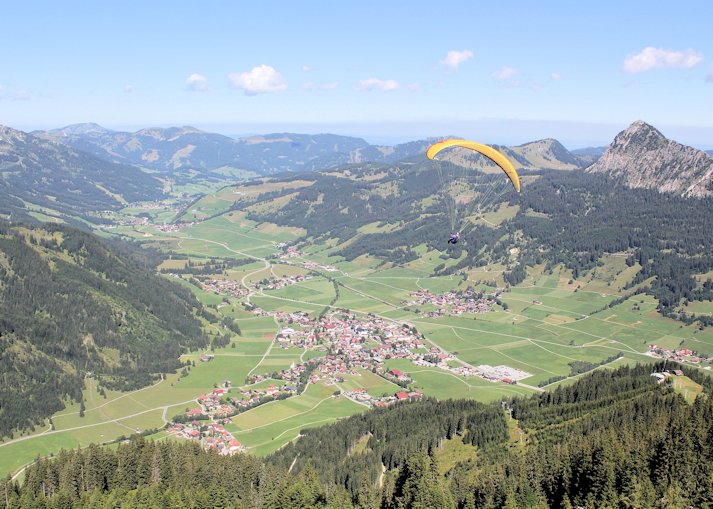
Just a few km East from Oberjoch, you cross the border from Bavaria into the Tannheimer Tal, a part of the Austrian province of Tyrol (but geographically very much a part of the Allgaü region). The Tannheimer Tal very much lives up to its self proclaimed accolade of being one of the most beautiful high valleys in the Alps. There are dramatic limestone peaks, emerald-green meadows, the stunning lakes of the Haldensee and the Vilsalpsee and several attractive small villages, which (although relatively developed for tourism) still maintain their traditional appearances and sense of scale in the landscape..

At Schattwald,  the first village in the Talheimer valley which you come to over the border from Bavaria, there is a perfect (but thankfully very localised) example of how future development of this beautiful region could go wrong. Here, one developer is single-handedly attempting to alter the character of the location through constructing a haphazard array of retail, accommodation and commercial premises in a hotchpotch of  architectural styles which are strung out along the highway.

CIMG9361

These developments appear to be completely out of any context to anything else round about. Virtually the first thing you see in Schattwald is the a gaudy yellow and blue “Lutz” supermarket (which looks something Ikea would be proud of or perhaps as an accommodation module for a future Mars mission). This is rapidly followed in quick succession by the boxy “Guthof”, set of minimalistic holiday apartments  (under construction) which would perfectly grace any modern industrial estate and then a series of further eclectic developments at varying stages of completion. Interestingly “Guthof” again makes “wellness” one of its selling points to potential investors.

CIMG9358

Perhaps the intention of the architects and developers may have been good, but to me and in this location it just seems out-of-place and ill-conceived. Why do the planners allow this ? Why are there apparently no design standards for commercial developments in such an iconic cultural landscape ?  For a good illustration of how this development style might snowball, take a  look at small towns in Canada and the States, where roadside sprawl, advertising hoardings and seedy looking “Diners” often stretch for miles and miles into the surrounding countryside, blighting otherwise attractive settlements and their settings. You can see the same process also as soon as you cross the borders into Belgium, where roadside advertising hoardings predominate and planning standards or settlement sprawl appear to be more lax.

IMG_6832

I’m not suggesting that development in the region should immediately be halted; a scenario which in itself will lead to certain stagnation within rural communities. Cultural landscapes and rural settlements constantly evolve and must be considered to be dynamic in nature. Healthy communities also provide the infrastructure and services needed to support and maintain viable local populations (as well as tourists), such as schools, shops, health centres, retail outlets and visitor accommodation. Communities which do not provide these facilities will stagnate or simply enter a spiral of decline as properties are snapped up as investment opportunities by second home owners from other parts of Europe.
CIMG9617

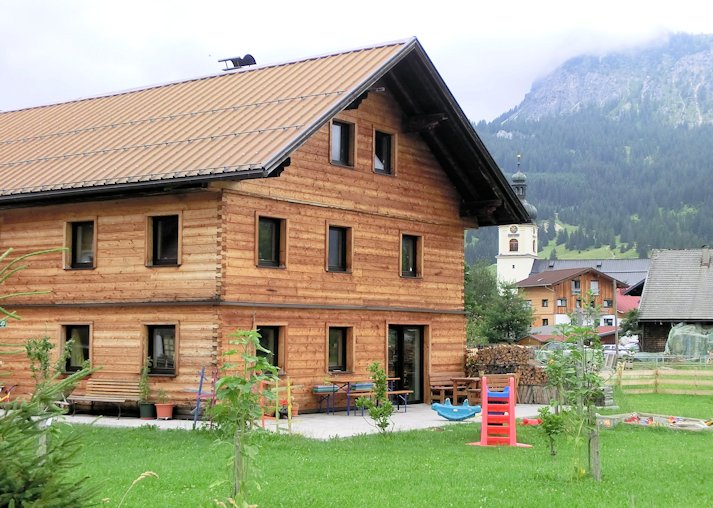
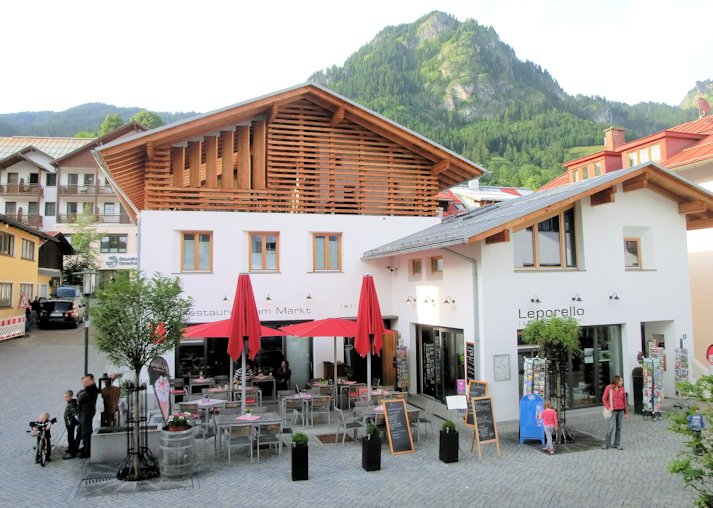
Developments which do occur should fit into the existing local cultural context where possible and should reflect local styles. In this respect new buildings can even enhance the cultural landscape if designed with some consideration of context. High quality innovative designs can revitalise communities and provide new pride and energy to local residents. From a positive perspective, I found many examples of innovative and high quality modern building styles around Allgaü and the  Tyrol. These generally incorporate both traditional and modern elements, whilst making use of new building technologies. Examples seen include houses and retail developments in Tannheim and Hindelang.
CIMG9740

Such developments make significant use of timber as a construction material and sit perfectly within the landscape alongside more established structures. I even found supermarkets in Tannheim and the nearby village of Gran which fitted reasonably well into their surroundings. So if this can be achieved on a small-scale, using sustainable materials, I’m sure there is also scope on a bigger scale for more sympathetic design of new resort developments and retail infrastructure. Local sourcing of timber products from sustainably grown and harvested sources can also help to provide additional income for the region’s farmers and foresters and should help to maintain the area’s proud tradition of craftsmanship, albeit with new innovation and technologies to boot.

CIMG9606

The Changing face of winter sports:

Thankfully, to date, development in the Allgaü region has generally been sensitive and based around existing settlements. Winter sports developments are still on a relatively small-scale and the region has been spared the stark, utilitarian concrete monoliths that we associate with 70s ski resorts such as Tignes, Les Menuires or Pas de la Casa. However this may be starting to change; nearby Austria, for example, has recently become a speculators heaven with many foreign investors, especially Russians, cashing in on the property boom around plush resorts such as Kitzbühel (and effectively circumventing Austrian property ownership laws through elaborate means such as registering a new Company as a loophole).

CIMG9477

Although the Allgaü and neighbouring regions do not compete with the big alpine resorts such as Chamonix or St Moritz, winter sports remain an important part of the local economy. Despite the threats posed by climate change in the Alps generally (and less sure snow conditions as in previous decades), small resorts such as Oberjoch are investing heavily in new lift infrastructure with a view to maintaining visitor flow through the winter months.

IMG_7380

This is no mere leap of faith that good snow conditions will continue to naturally persist over the coming decades; we know that ski-ing (particularly high level summer ski-ing) in many parts of the Alps is under threat through climate change. However, the relatively high elevation of Oberjoch at (1200m) has so far prevented significant reductions in snow cover. It’s really quite telling though that investments in lifts are also significantly accompanied by snow making infrastructure including snow canons and retention basins designed to provide a water supply for artificial snow manufacture. These features can be visually intrusive and erode the visual integrity of the cultural landscape. Guaranteed snow comes with a price attached !

IMG_6846

With questions about overall sustainability of the downhill ski industry in an era of climate change, resorts such as Oberjoch and Tannheim need to consider how they diversify their activities to maintain tourist numbers throughout the year. Traditional summer visitors appear to be somewhat down in numbers across the Alps with an overprovision of summer accommodation options and many other alternative holiday destinations competing for business (we certainly saw many flats and rooms available for rent in what should be the peak summer season).

There appears to be a trend at the moment towards increasing promotion of active adventure tourism such as downhill mountain biking, paragliding and climbing which will appeal more to the “Pepsi Max” generation of younger urbanites who are keen to get their adrenaline fix. This compliments the increase in the more sedentary wellness industry with its holistic retreat centres,  scented hay baths and yoga therapies.

Slow Tourism and Green Tourism

CIMG9427

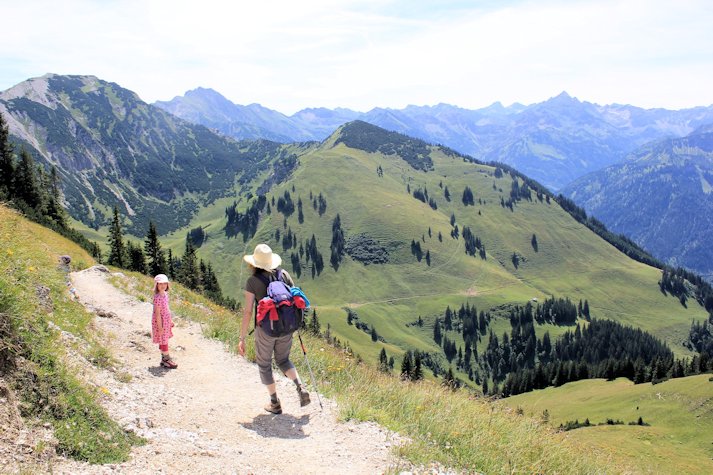
Another significant change in the tourism industry over recent years is the growth of “slow tourism” and “green tourism”, both of which place an emphasis very much on experiencing local culture, landscapes and the natural environment at an easy pace, albeit often with modern comforts and accommodation standards. The Hinterstein Tal in particular to the East of Hindelang has pioneered a green tourism approach including elements such as traffic free roads, wildlife watching, sustainable construction, local festivals and “slow food”.
IMG_7191

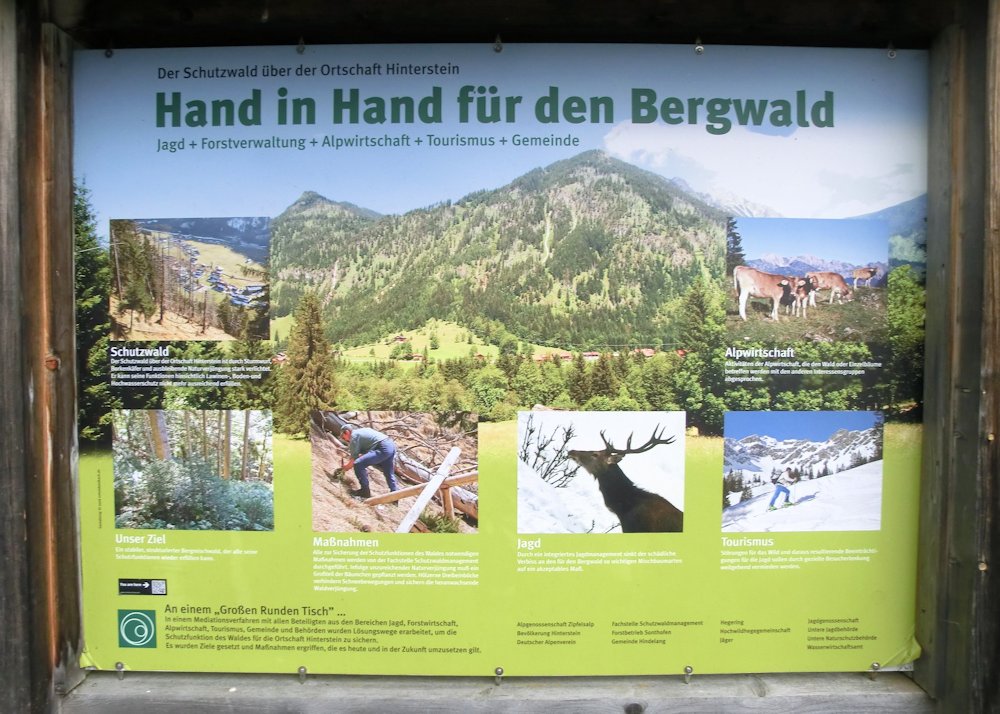
The Hinterstein approach provides me with real optimism about the development of a model for sustainable communities in the Alps.  This model involves respecting nature and promoting investment in “natural capital” and ecosystem services. In Hinterstein this has involved active restoration of the upland forests which protect the fragile slopes from the impacts of erosion and avalanches, particularly in the winter months. Over the years many of these forests have been devastated by increasing winter gales, bark beetle plagues and by poor land management practices which favoured overcutting and grazing of the steep slopes.

IMG_7276

CIMG9336

CIMG9839

Although many of the region’s forests have been sustainably managed, there have historically been pockets of intense over-utilisation, such as around the Grunten mountain, where wood was cut to supply charcoal for iron ore production. Often the original mixed forests have been replaced by monocultures of spruce, which do not offer the same biodiversity or soil conservation benefits. Large gaps in the forest cover, devoid of regeneration can also frequently be seen as a result of poor management practices. Sometimes natural erosion and landslides also result in the dramatic loss of forest cover such as around the Vilsalpsee in the Tannheimer Tal.

CIMG9625

Happily, there are moves afoot to restore and regenerate some of the worst degraded areas of montane forest in the Hinterstein Tal. This involves protecting areas from grazing to restore the woodland understory and species diversity. On steep open slopes affected by snow avalanches, special techniques have been developed to protect newly planted trees and to allow these to become established. These include constructing wooden tripods around the trees along with more complex timber platforms which help to buffer the velocity of the avalanches. Many of these techniques are showcased at the Bavarian Forest Education Centre near Füssen.
CIMG9413

CIMG9540

Green Tourism and Cultural heritage:

One of the other positive aspects about “green” tourism is that it can also help to preserve and maintain cultural traditions through fostering local pride and increasing a sense of local identity. Regional architectural styles, local cuisine, crafts, traditional music and village festivals are all elements which can thrive through a green tourism model and which might attract the type of visitors seeking a more authentic tourism experience.

CIMG9423

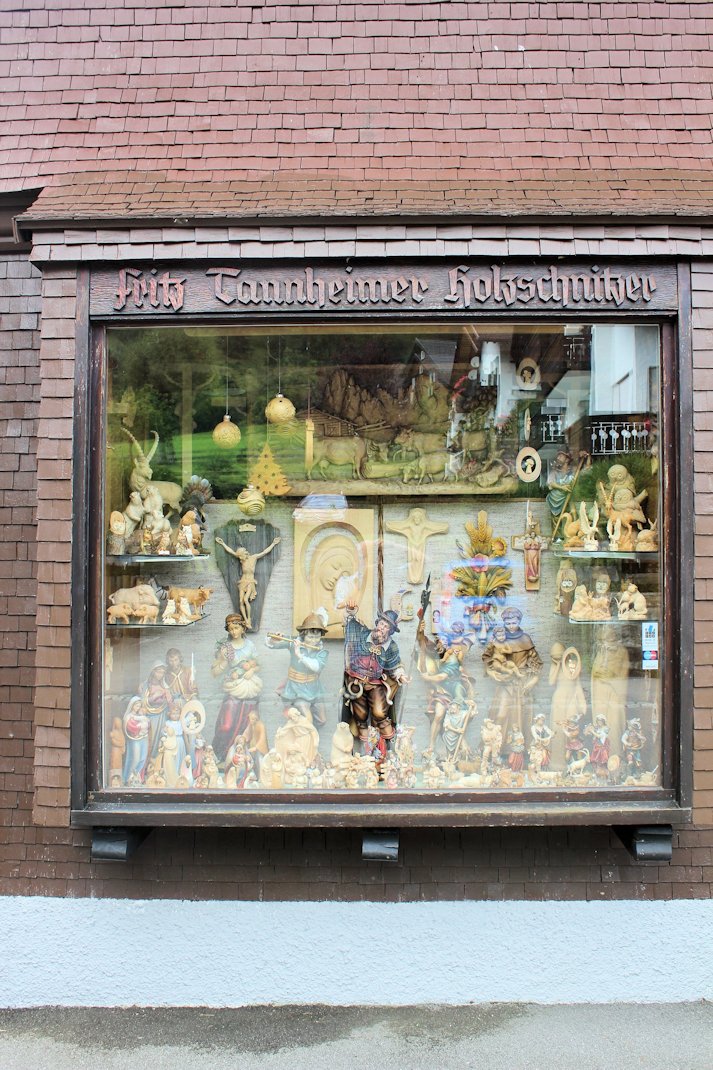
These are also aspects which can also put power firmly back into the hands of local communities and businesses. It is local people who have the knowledge and ownership of these traditions and who can present these most effectively; perhaps through innovative ways including the integration of new technologies. In the Hindelang area particularly there are many living traditions which can be spiced up for new audiences including traditional village “dorf” fests, wood carving, timber construction, seasonal celebrations and  folk music. Through volunteer effort, the community in Hinterstein has also restored an old open air swimming pool as an asset for locals and visitors which also doubles as a living ecological habitat with frogs, newts and pond skaters.

IMG_7305

IMG_6996

Farming for the Future:

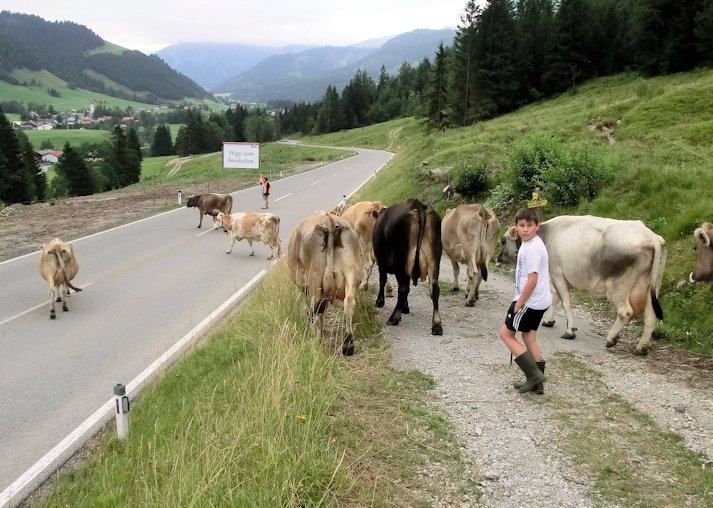
The farming community have one of the key roles to play in the promotion of sustainable tourism through maintaining the diverse cultural landscapes of the Allgaü region. Centuries of extensive cattle grazing have helped to create some of the most diverse meadow habitats in Europe. In early summer these meadows come alive in a blaze of colour with wildflowers such as yellow rattle, meadow cranesbills, bellflowers, knapweed and devils bit scabious. These in turn provide a habitat for a diverse range of invertebrates including fritillary, red admirals, peacocks, longhorn beetles and bumble bees.

CIMG9505

IMG_7257

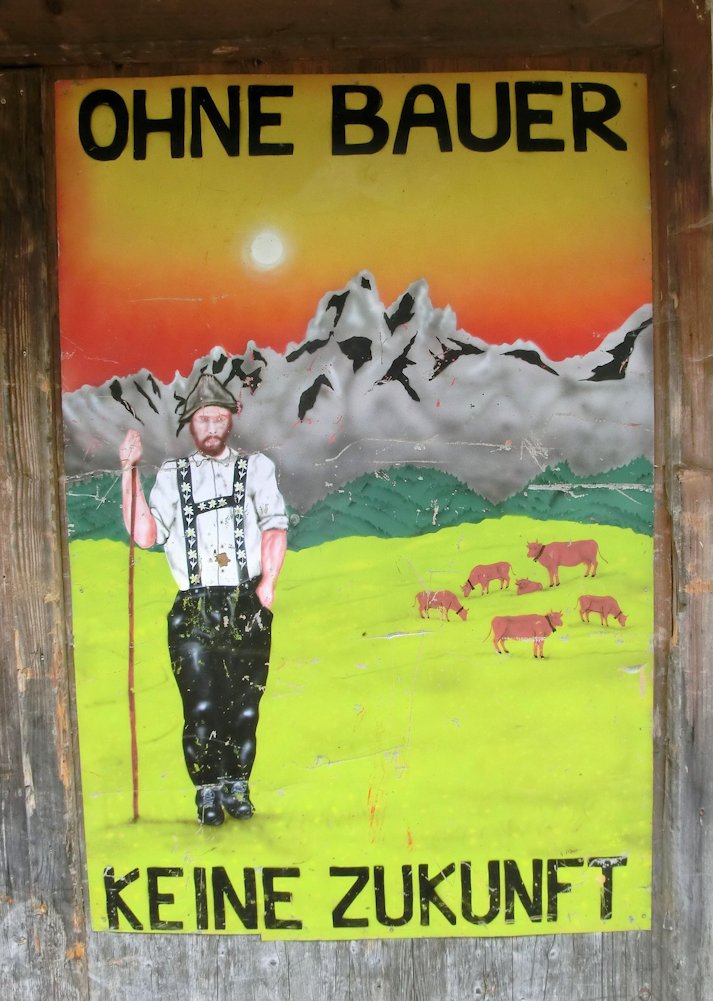
The grazing of these species-rich meadows by cattle provides the distinctive strong-tasting mountain cheeses and other dairy products from the region. The most important aspect is that these meadows are never treated with chemical fertilisers. Whilst farmers know that fertilisers would enrich the soil and potentially increase productivity, they are also aware that agrichemicals would effectively wipe out the huge diversity of flora and fauna. Ultimately this would also detract from the unique flavour of local speciality products; as one farmer had hand painted ominously (in post apocalyptic style) on a sign by the Visalpsee “Ohne Bauer, Keine Zukunft” (“without farmers, no future) – this is certainly the case for the species rich alpine meadows which characterise the area.
CIMG9628

CIMG9667

In recent years, tourism has become almost as important for the region’s farmers as the sale of the agricultural products themselves. Cows are grazed in the summer on high mountain meadows where numerous “alpes” or “alm” huts are located. These provide a rustic mountain café environment for walkers and provide simple meals, beer and soft drinks to tired, thirsty visitors. Visiting these alpes is one of the greatest pleasures of walking in the region (as well as being a great motivation for getting kids up into the mountains for a hike). Sometime a visit to an alm hut will be accompanied by a musical serenade local from local musicians – kitsch perhaps, but also quite fun. Many farms also provide the opportunity for “Urlaub am Bauernhof” (holiday on the Farm) and provide guest accommodation and opportunities for visitors to “muck in” with the locals.

IMG_7239

CIMG9612

Walks with a Theme:

local communities are cashing in on the “green tourism” bandwagon through the development of a whole host of themed paths for walking and cycling. Whilst providing practical recreational opportunities, these also encourage visitors to become immersed in local heritage through active learning and role plays. A good example is the “Schmuggler Steig” which traverses the slopes of the mountain between Oberjoch and Schattwald and which leads visitors through a variety of staged learning posts.

CIMG9348

Participants have the opportunity to adopt the role of either customs officials or smugglers and have to fulfil a number of themed tasks en route. Unnecessary complication of a straightforward walk perhaps ? For regular, confident outdoor enthusiasts perhaps; but perhaps for others (including families and the less active) this serves as a means of getting people into the outdoors (and giving them cynically the opportunity to spend money within local villages).  During our stay in the region we found no shortage of innovative interpretation projects and themed trails including mountain summit “guest books”, giant spiders webs for climbing and aerial walkways over the trees.

IMG_7440

CIMG9536

CIMG9519

Communities at the Crossroads:

In a world of increasing homogenization, local cultural identity, natural heritage and indigenous products can provide key selling points for visitors; local distinctiveness (or the thing that makes any area unique) is now high up on the wish list of potential customers. Communities are starting to realise the value of their natural capital and to cash in on this.

Resort hotels, casinos and theme parks will certainly have a big role to play in the future development of tourism in the Alps. Personally, however, I think that this is the wrong road to follow. Community based “green” tourism models appear to me to offer the best opportunities  for  creating a sustainable tourism economy which is both responsive to environmental concerns and which offers tangible benefits to local people. This also keeps power concentrated in local hands rather than handing it over to developers and big corporations (no matter how attractive these options might seem as a quick fix for communities).

CIMG9736

Through our actions, we could create either a green utopia or, without foresight, a developers free for all in the Alps. Reality will, most likely, lie somewhere in between these two extremes. Most significantly, local communities must not become complacent and simply serve up tourism in the way it has always been done. Similarly, local people should not just rely on the “good will” of developers to impose short-term solutions which might claim to bring jobs and inward investment as short-term financial fixes.

In the competitive, globalised world of tourism, innovation and co-operation will pay dividends. Communities must take power into their own hands and work together, through effective partnerships, to deliver enduring, quality and attractive visitor opportunities. Ultimately it will be the visitors themselves, however, who decide upon the future of alpine tourism; after all the World really is their oyster…

CIMG9603

IMG_7425


Posted in In Europe, Mountain Treks, Trees & Greenspaces, Wild Places | Tagged , , , , , , , , , , , , , , , , , , , , , | Leave a comment

Range of Light

CIMG0100

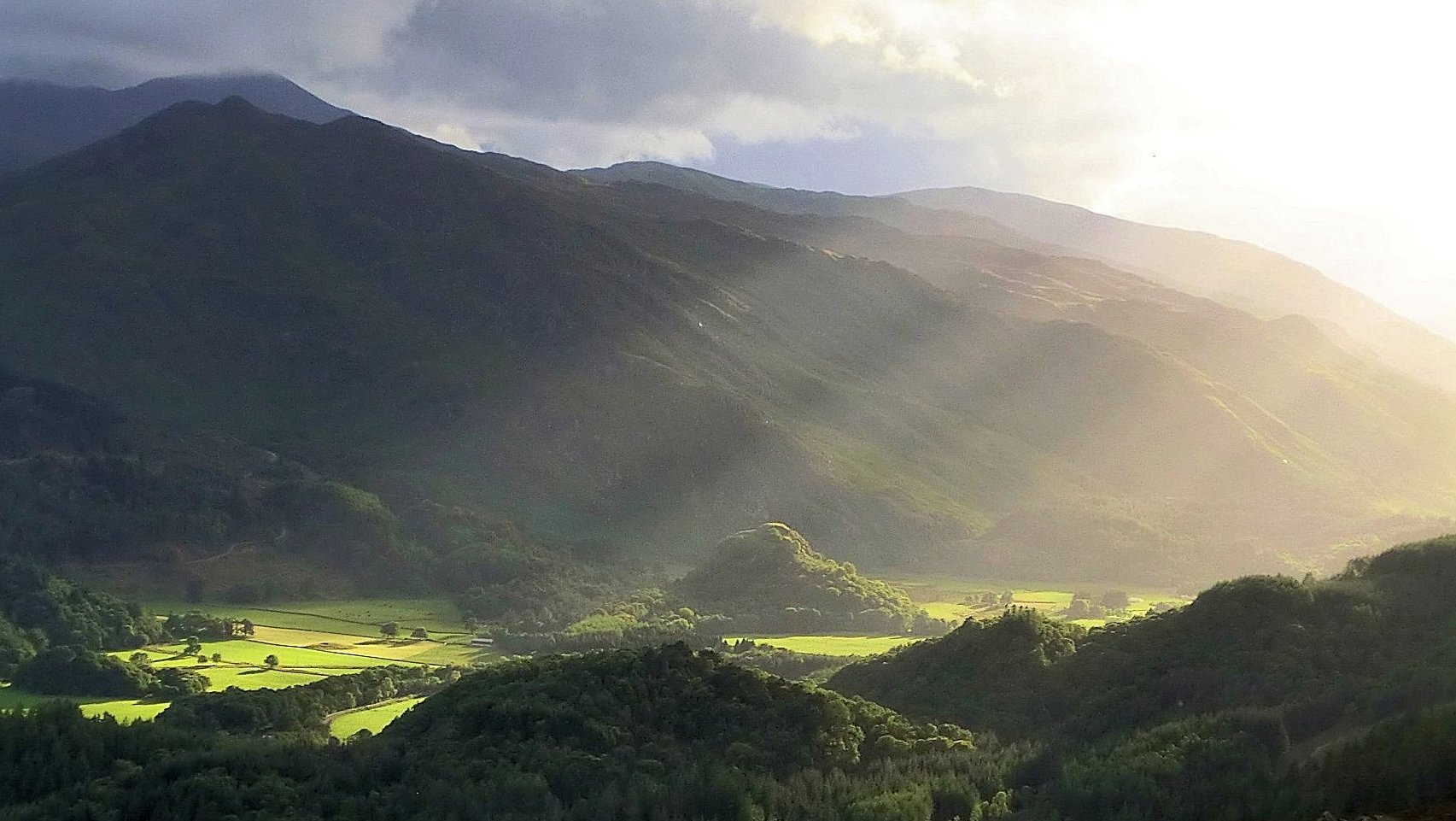
A week in Scotland at the end of August gave me the chance to revisit some old haunts around Stirling and the Trossachs.  I am reminded that the light in Scotland is not quite like anywhere where else; a seemingly flat grey, monochrome landscape can suddenly be transformed as the “God rays”, like giant spotlights, burst through the cloud to add drama and potency to the landscape.

CIMG0091

The ancient pictish hillfort of Dundarn by Comrie looked particularly atmospheric in the low-level evening sunlight. I am reminded of Stuart Adamson’s song “Eileden” or Runrig’s “Heart’s of Olden Glory” about a mythical place where legends and heroes are reborn.

These are hills that I first explored as a young man but which still possess an enormous power and energy for me; like John Muir’s Sierra Nevada, these were my first “Range of Light”. It’s all too easy to forget this on a dreich, damp Scottish day – until suddenly the sun comes bursting through and the legends are once again reborn.

CIMG0042

CIMG0066

CIMG0115

CIMG9930

CIMG9990

Posted in History & Culture, In Scotland, Mountain Treks, Wild Places | Tagged , , , , , , , , , , , , , | Leave a comment

New Life in Scotland’s Ancient Forests

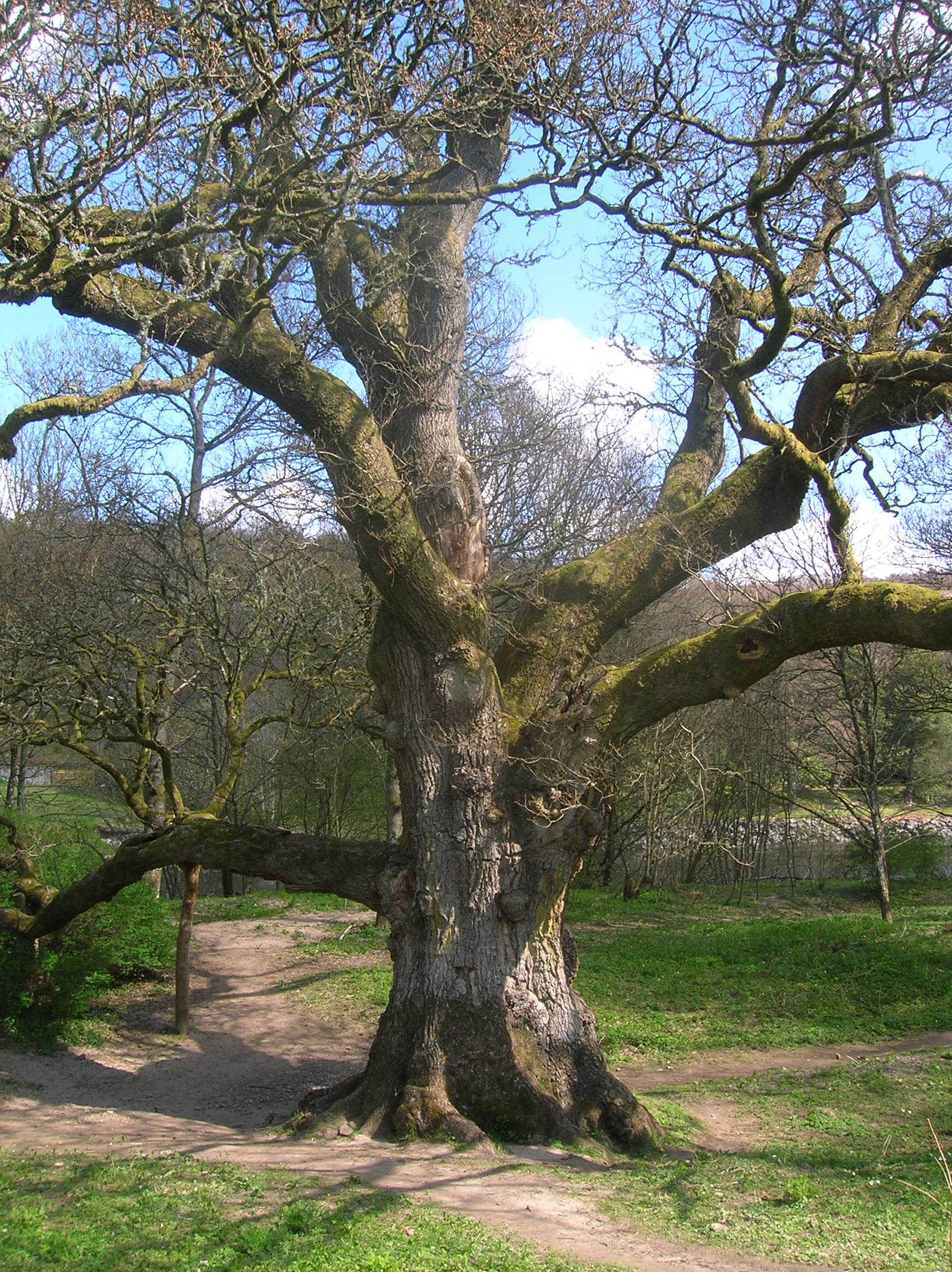
On the banks of the River Tay by Dunkeld in Perthshire stands the ancient “Birnam Oak”, reputedly the sole surviving tree of the famed Birnam Wood of Shakespeare’s  Macbeth. In Shakespeare’s “Scottish” play,  Malcolm’s soldiers camouflaged themselves with branches from Birnam Wood before capturing Macbeth’s stronghold at Dunsinane some 20 km away, making the prophecy of the infamous three witches come true.

“Macbeth shall never vanquish’d be until Great Birnam Wood to High Dunsinane Hill shall come against him”

DSCN3933

The Birnam Oak – several centuries old

This battle-scarred and ancient sessile oak (Quercus patraea) now has several of its limbs supported on wooden props and much of the trunk (5,5m girth) is now hollowed out and infected by fungae. Although the tree is likely to be several hundred years old, it is unlikely that it would have existed in 1057 when the Battle mentioned in Macbeth was reputedly fought.

However this ancient tree invites us to connect with a mythological past where “wild woods” dominated the landscape and when the “Great Wood of Caledon” reputedly covered much of ancient Scotland. We imagine the Roman legions venturing into dark and brooding forests only to be hunted down mercilessly by the ferocious Pictish warriors or picked off, one by one, by ravenous wolves and bears.

DSCN3695

Scattered remnants of Caledonia’s “Great Wood”

Whilst the “Great Wood of Caledon” may have been more than a myth than a reality, there were certainly significant areas of ancient natural woodlands across Scotland, though even by the Iron Age these would have already have been significantly altered by people. Certainly by the Middle Ages, Scotland was largely a treeless land and this was later compounded in the Highlands by the collapse of the clan system and by ever-increasing, exploitative systems of land management.

CIMG6720

Iron Age woods were widely managed for forest products

CIMG6714

Scotland’s Iron Age inhabitants were skilled woodworkers

Woods in inaccessible locations, such as in deep ravines or on islands (i.e. away from the attention of browsing deer or livestock), or which had some economic value, such as for the production of charcoal or bark for the tanning industry, fared somewhat better. Many of these remnant patches of semi natural woodland survived down through the centuries. Other more accessible woodlands were slowly lost through a process of attrition, including through ever-increasing deer populations and through the use of woods as shelter for livestock.

Throughout Scotland, however, there are still enough remnant patches of ancient semi natural woodland to give, at least a flavour, of how ancient Scotland might have appeared; these include oak and ash woodlands in the lowlands and western highlands, birch woods in the uplands and Caledonian pine woods, which are located mainly in the North Eastern Highlands.

DSCN3395

Ancient coppiced oak – Loch Tay

One area which illustrates traditional patterns of woodland management is around Loch Tay in Highland Perthshire. Above the shores of the Loch, numerous historic features including abandoned sheilings, “ferme toons”, lime kilns and old cultivation terraces proliferate across the landscape . One place where you can really feel the presence of the past is the abandoned village of Croft Feunaig; a cluster of dilapidated buildings where several families would have eked out a living through growing simple crops such as oats and barley and through tending sheep and traditional black cattle. Like many lochside settlements, the population of Croft Feunaig fell victim to the infamous Highland Clearances orchestrated, in this instance, by the ruling Campbell of Glenorchy elite. In the first half of the 19th Century, the area lost around one-third of its population through emigration to the New World or the emerging industries of the Central Belt.

DSCN3350

The haunting abandoned “ferme toon” of Croft Feunaig

Canuschurich woods, located just below Croft Feunaig, comprise of an ancient underwood of oak, birch, ash, hazel and rowan, including some old coppice stools which appear to be centuries old. The woods would have been managed extensively to provide small round wood products such posts and hurdles for local people. Later on, as industries developed along the loch shore, the underwood would also have been used for commercially for charcoal production, perhaps for iron smelting. Oak bark, particularly, was a valued commodity and would have supplied the leather tanning industry. Given the age of these woods with their ancient coppice stools, it is certainly likely that their past economic value contributed to their preservation.

DSCN3359

Coppice underwood after many years regrowth – Loch Tay

Managed coppice woods also supported a wealth of biodiversity including wild hyacinths (“bluebells”), wild garlic and dogs mercury. The cycle of coppicing ensured a steady supply of small wood products whilst providing a stable habitat for slow colonising specialist woodland plants. The dense shading, created during the mature phases of the coppice cycle, also discouraged competition from other rank grasses and herbaceous plants. The woods could therefore effectively provide a sustainable renewable resource for hundreds of years without the need for replanting. Sometimes larger trees, known as standards (usually oak) were allowed to grow up through the underwood to provide larger construction  timber.

DSCN1193

Timeless scene – coppice hazel and “bluebells”

Another tree associated with Scotland’s ancient woodland must be the birch. Birch woods are relatively common in many parts of the highlands and often represent a transitional habitat; the birch generally not being noted for its longevity. Certainly the birch, along with other pioneers such as aspen and hazel was one of the first colonisers to take advantage of the warmer conditions following the ice age and it paved the way for other species such as Scots pine, oak and ash. There are however sites such as Morrone Birkwood near Braemar which have retained much the same species composition for thousands of years.

IMG_0583

Native Birchwoods in Highland Perthshire

autumn gold

Autumn colours of Loch Tummel

Reforesting Scotland – the Sitka Revolution

By the turn of the 20th Century Scotland’s woods were reduced to just a few tiny fragments, although some pioneers, particularly the “planting” Dukes of Atholl, had already been experimenting with large-scale replanting of areas with introduced species such as European larch. In 1919 The Forestry Commission was created in to effectively reverse the depletion of timber stocks following World War I and to create a strategic reserve. Whilst the creation of the Commission helped to reverse the trend towards deforestation, particularly in the Highlands, Scotland’s native woodland fragments continued to be eroded away through a combination of neglect, overgrazing and poor management.

The initial emphasis was very much upon establishing plantations of exotic conifer species including Sitka spruce, Lodgepole pine and Douglas fir, which all grew well in the damp Scottish climate. Since 1945, many ancient woodlands were under-planted with conifers which rapidly altered the soil chemistry and damaged the woodland understory resulting in a loss of biodiversity and the creation of monoculture stands of trees.

DSCN1120

Commercial forestry plantation

Unlike the more sensitive traditions of continuous-cover forestry, practiced in Europe (in which individual timber trees are selectively removed from the forest) the approach in Scotland has been a more “colonial” approach of planting, thinning and eventual clear felling of large areas, leaving un-harmonious scars on the landscape. This relatively insensitive approach has been at the expense of Scotland’s landscape, biodiversity and ecology.

However around the late 1960s things started to change as awareness of Scotland’s ancient woodland legacy started to increase. The Publication of Steven and Carlisle’s authoritative work “The Native Pinewoods of Scotland” in 1959 marked perhaps the first major turning point in terms of the recognition of native Scottish woods (in much the same way that ecologist Oliver Rackham’s work on the English Countryside did much to raise awareness of the plight of ancient woods South of the Border).

DSCN1200

Harvesting commercial plantations on Skye

Forest1

Timber awaiting transportation

Winds of Change in the native pine woods:

In the early 90s one of my first jobs after graduating, was as a seasonal ranger for the Scottish Wildlife Trust at the Pass of Ryvoan in Glenmore, Speyside. This small remnant of ancient Caledonian pinewood will always hold a special place in my heart.

The area is alive with history and legend; an ancient thieves road, used by highland cattle rustlers runs through the Pass towards Abernethy Forest and there are tales of hauntings and witchcraft. Most beguiling of all though is the turquoise coloured Lochan Uaine (The Green Loch) which nestles in a small hollow near the main path surrounded by ancient, gnarled old Scots pines. Legends say that the remarkable colour came about due to fairies from the nearby fairy knowe washing their clothes and staining the water green; more scientific explanations point to fine particles of suspended sediment in the water causing a refraction effect of the light. Over the course of the summer I enjoyed many happy days amongst these beautiful old pines, sometime battling through dense undergrowth to carry out surveys of the woodland.

IMG_1075

The Pass of Ryvoan Native Pinewood

Ryvoan is one of a number of remaining areas of native Caledonian pine forest fragments identified by Steven and Carlisle; others include gems such as Rothiemurchus, Glen Affric, Glen Feshie, the Black Wood of Rannoch and Glen Quoich. The story of Ryvoan is pretty much the story of the Caledonian pine woods as a whole. As nearby estates became increasingly managed for sporting purposes (deer and grouse shooting), deer numbers increased and regeneration of native woodland pretty much ceased. During the War the area was logged by Canadian lumberjacks, who took out the best and the straightest stems, leaving just a few stunted and mis-shapen “granny” pines. It is these “reject” timber trees which give the old Caledonian forests much of their inherent charm and character today.

IMG_1079

Mature Native Pine – Ryvoan

When I worked at Ryvoan, the area had been leased by the Forestry Commission to the Scottish Wildlife Trust for a nominal fee. However it was obvious that the Commission were just then starting to realise the conservation, amenity and PR benefits of managing ancient woods such as Ryvoan. New FC signs proclaiming “Forest Nature Reserve”  appeared mysteriously next to the original Scottish Wildlife Trust signs one day (which were, even more mysteriously, damaged by a vehicle necessitating their removal about that time).

Twenty five years on from then and there have been huge changes at Ryvoan and the surrounding Glenmore Forest. I’m now amazed when I go back there to see how much natural regeneration has occurred and how young Scots pines along with aspen, birch and willow are colonising further up the surrounding hills. Even more remarkable is the greater concept to create one large, linked up area of native pinewood habitat across a number of neighbouring estates including Abernethy, Glenmore Forest, Cairngorm Estate and Rothiemurchus. A wonderful visitor centre has been constructed in Glenmore, with preservation of the old Caledonian pine woods being the key message.

IMG_2080

The future “goes native” in Glenmore

The realisation of this is having huge impacts on the landscape; non native areas of plantation forestry are being removed to leave a few surviving stems which will act as seed sources for new native trees or as standing deadwood. Although it will take many years for a “natural” looking forest to develop across the whole of Glenmore, the ambition to recreate a large area of continuous habitat is laudable.  The partnership-working required has also, no-doubt, been considerably helped through the creation of the Cairngorms National Park Authority and the fact that neighbouring estates have, over the years, been acquired by public bodies which are sympathetic to conservation.

IMG_1111

Survivors – a few remaining native Scots pine after felling

IMG_1088

Lochan Uaine – a magical place

IMG_1106

View across Loch Morlich to the Cairngorms

One of the greatest challenges in taking forward this ambitious forest restoration programme is to keep deer numbers down to sustainable levels to ensure continuing woodland regeneration. There is also an emphasis on trying to maintain local genetic diversity within seed sources. This will be more difficult to achieve, I feel, as many of the plantation forests, which have been felled, contained identical looking Scots pine of Continental provenance; no doubt many of these seeds will have dispersed widely and hybridised with local provenance trees. I think though that even purists would agree here that there must be an element of realism here and that the emphasis should be upon restoring broad ecosystem function across a large area of habitat rather than the somewhat utopian (and perhaps slightly sinister) objective of turning back the clock to a time when only local genetic sources existed in Glenmore.

IMG_2085

Expanding tree line – scots pines creep up the hillside

Recreating an Ancient Royal Hunting Forest in the Trossachs

Another place dear to my heart is the Trossachs area between Callander and Aberfoyle.  Me and my school friends used to cycle around there on weekends, making occasional and strenuous round-trips over the Duke’s Pass; a favourite destination being the famous Brig o Turk Tearoom (which remarkably still stands and is in business all these years later).

DSCN0583

Glen Finglas – an ambitious native woodland restoration project

Brig o Turk marks the starting point for Glen Finglas, a broad side glen which has been exploited over the years for hydro power, plantation forestry and sheep farming. The upper end of the Glen however contains some remarkable treasures and was a former royal hunting forest of the Stewart Kings. The remaining area of upland wood pasture comprises the largest collection of ancient trees in Scotland and includes oak, alder, birch, hazel, rowan and willow. Originally many of these old trees would have been pollarded or coppiced and the area grazed lightly by cattle.

IMG_3629

Changing landscapes – mixed native woodland (foreground) and spruce plantations (background).

IMG_3617

Royal hunting ground – ancient wood pasture in Glen Finglas

Centuries of overgrazing, however, prevented any further natural regeneration from occurring thereby reducing the wood to just a few scattered remnants. In recent years however the Estate has been acquired by the Woodland Trust under the banner of the Scottish Forest Alliance. The aim is to turn around centuries of mismanagement and to restore the wood pasture and the surrounding native woodlands to their former glory. This has involved fencing to reduce deer and sheep numbers (to allow natural regeneration) and the reinstatement of cattle grazing under controlled conditions which are compatible with conservation objectives.

The regeneration of native woodlands in Glen Finglas is one element of the Great Trossachs Forest initiative which is being led by the Scottish Forest Alliance to recreate native woodland over a core area 17,000 ha of Loch Lomand and the Trossachs National Park, between Inversaid, Loch Katrine and Loch Venachar. The Vision of the partners is a very long-term one and will take 200 years to achieve. There are clearly parallels with the Glenmore Forest initiative and the situation is in some ways quite similar.

IMG_3623

Cows are back – but carefully managed to promote natural regeneration of woodland fragments

IMG_3625

Wood pasture – many ancient pollards survive

When we look at the examples of Glenmore and Glen Finglas, it seems incredible to think how things have moved forward from just half a century ago when Scotland’s native woodlands were very much the Cinderella of the Scottish countryside. Let’s just hope that this  momentum and ambition can be maintained over the next couple of centuries to see these projects through to fruition; though who knows just what sort of world we will be looking at then and what environmental challenges we will be facing.

Community Woodlands and Rural Development:

In recent years another interesting trend in woodland management with Scotland has been the growth of community woodlands and local development trusts. These  have been helped greatly helped by Scottish Government legislation including the Land Reform Act (2003), The Community Right to Buy Scheme and the National Forest Land Scheme.  Under these schemes, many communities have had the chance to aquire land which was formerly in private or State hands and to bring this under local community management. This has usually involved the creation of a local partnership or trust to representing the views of the various stakeholders and co-ordinate management as well as the flow of resources and revenue. These groups have also been highly successful over the years in levering in money from diverse sources such as the National Lottery.

Community woodlands vary ernomously in their scale, extent and ambition; from a just a few hectares adjoining urban areas, to huge estates covering 1000s of hectares of the Highlands. Some of the most celebrated examples of Community buy-outs include Assynt, Knoydart, Eigg, Gigha and North Harris, have been well publicised. Many of these groups are now actively involved in native woodland regeneration, ecotourism and diversification of the rural economy. In this respect sustainable development is often at the core of long term planning.

IMG_2483

Community management in action – log splitter

For several years, I served as a director the Community Woodland Association (CWA), an umbrella body which provides information, advice and networking to its member groups, who now number around 200 across Scotland. During my time with CWA, I was able to see some superb examples of community woodlands in action. The good examples are too numerous to mention here (although there are sometimes less successful examples, particularly in urban areas which pose unique challenges requiring additional support).

One example which particularly stands out is Abriachan Forest Trust which is located not far from the shores of iconic Loch Ness. In 1998 the community purchase the 534 ha estate from Forest Enterprise. Whilst the wood is less interesting from an ecological standpoint (although this is work in progress), the community have made huge strides to manage the woodland productively as a source of local forest products, including fuelwood and also as an educational, health and recreational resource. Achievements to date include the creation of a forest classroom for educational activities, a forest playground, a trail network and fitness facilities.

IMG_2454

Forest classroom – for a new generation of foresters

Each community woodland has its own particular emphasis; for example, at Milton Community Woodland near Tain, there has been an emphasis on involving local young people in the local woods through providing training and workshops on woodland crafts and log building construction. In other woodlands, such as Anagach by Grantown-on-Spey, the emphasis has been more on enhancing ecological habitats with the pine woods and upon providing a network of trails to support sustainable tourism whilst ensuring productive use of the woodlands. Meanwhile the Galgael Trust, based in Govan and Argyll, tackles the problems of the inner city and  uses traditional woodland crafts as a means of engaging long-term unemployed people through providing them new skills, challenges and a sense of purpose.

DSCN1009

A sustainable future for Scotland’s woods ?

The Future is bright:

Despite the challenges faced by centuries of neglect and poor land management, Scotland is now paving the way in terms of developing sustainable forestry and land use practice which benefit both nature and people. Although other European countries have protected and managed their forests far more sustainably over the centuries, Scotland is now catching up fast. In this respect, necessity is the mother of invention and there is a level of energy and innovation in Scottish forestry and rural development which few other countries can currently match.

However, there is still a huge amount  of catching up to be done and the challenges of developing a truly sustainable forest economy are immense; particularly considering the issues of climate change. To ensure that this continues, all sectors of the forestry community (including private estates and commercial companies) need to continue to forge effective dialogue; to share innovation and to learn from examples of others’ best practice. It never ceases to amaze me how the radicals of 3o years ago have moved very much into the main stream and how their ideas have now become embedded into the heart of public policy. Just think back to the 1980s when tax incentives were being paid out to pop stars to turn the Flow Country into low grade Sitka factories; so much has changed since then.

The future is bright for Scottish woods…

Posted in History & Culture, In Scotland, Trees & Greenspaces, Wild Places | Tagged , , , , , , , , , , , , , , , , , , , , , , , , , , , , , | Leave a comment

Secrets of the Wild Wood

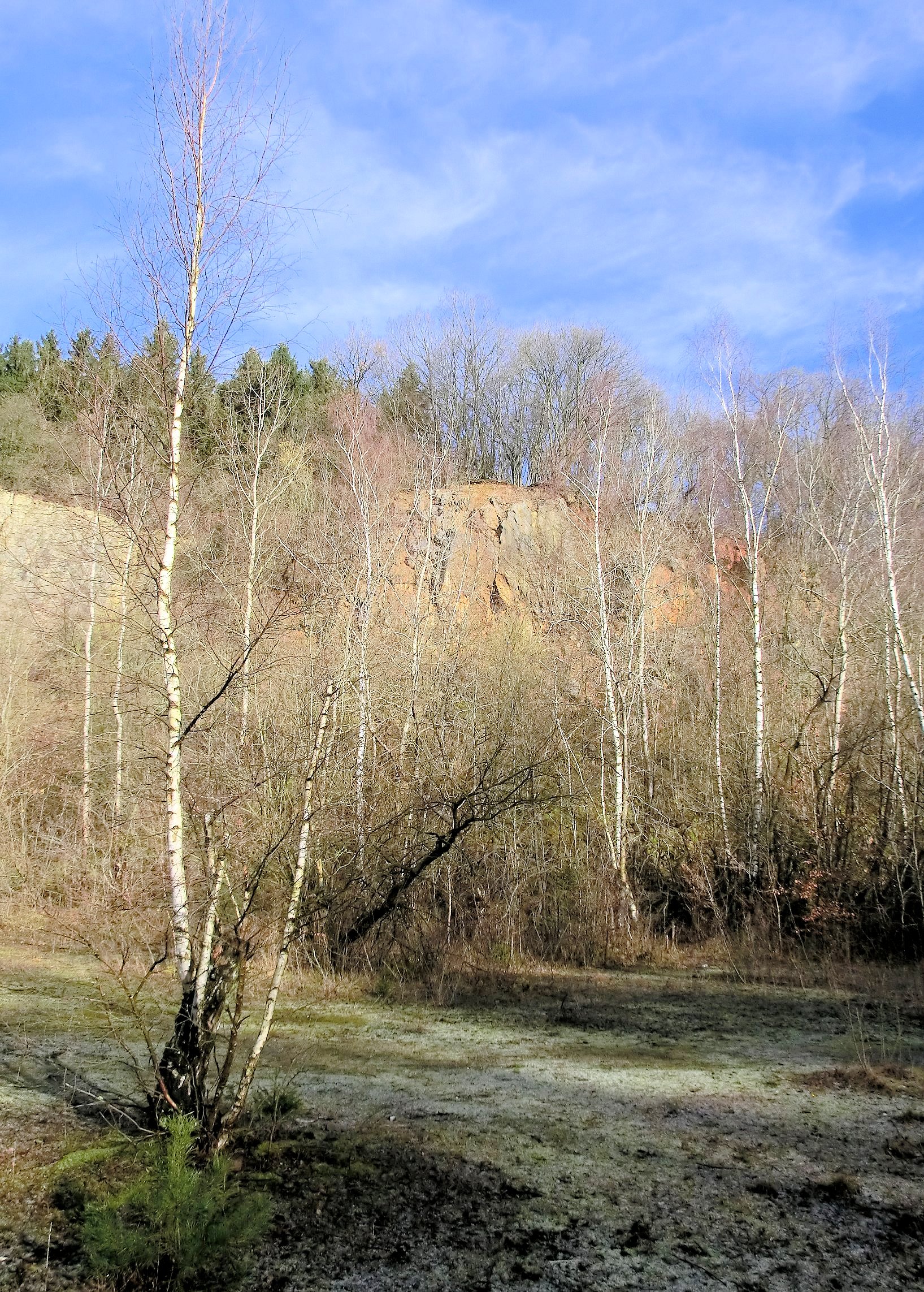
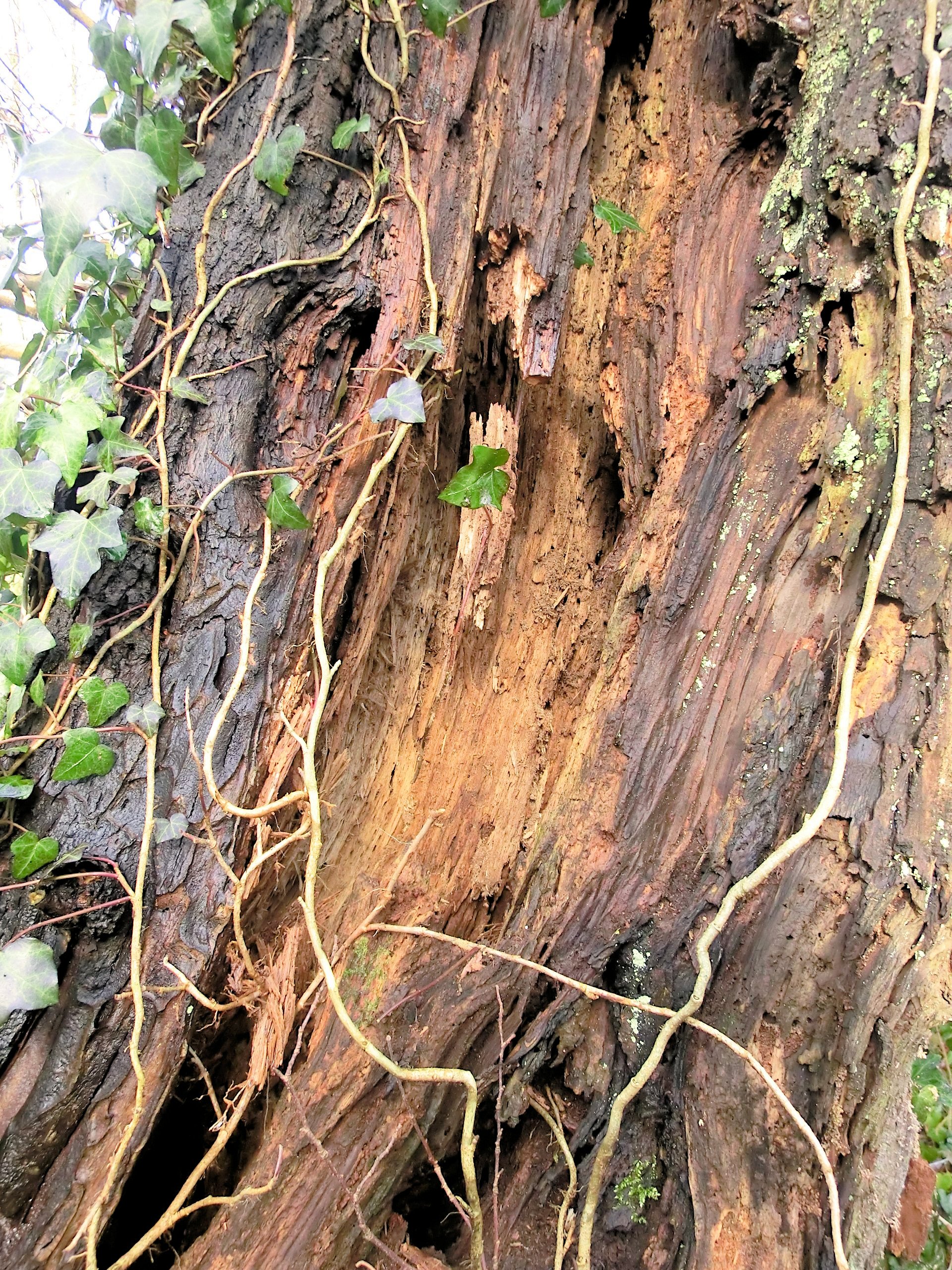
Like a scene from a distant lost world, the damp woods of the Inde valley between Hahn and Walheim hang with  a mass of tangled ivy. Dead branches, rotten tree stumps and slippery, moss-covered rocks litter the ground, making for treacherous conditions underfoot. Ominous, loose boulders hang poised on the craggy slopes above; ready to tumble down and crush unsuspecting adventurers below. The scene appears unchanging and primordial; but these seemingly, ancient woods conceal a secret all of their own.

CIMG8209

CIMG8235

CIMG8228

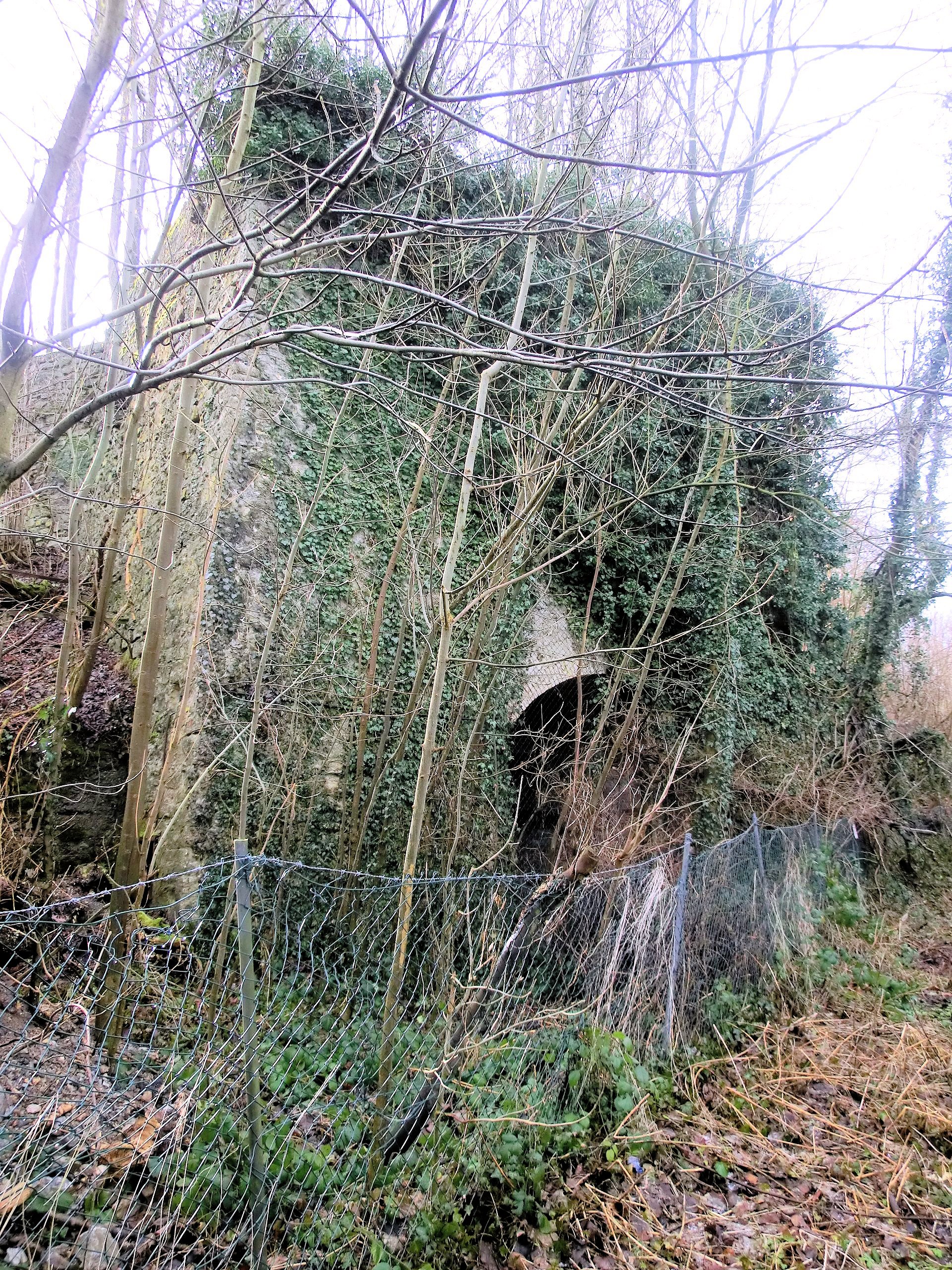
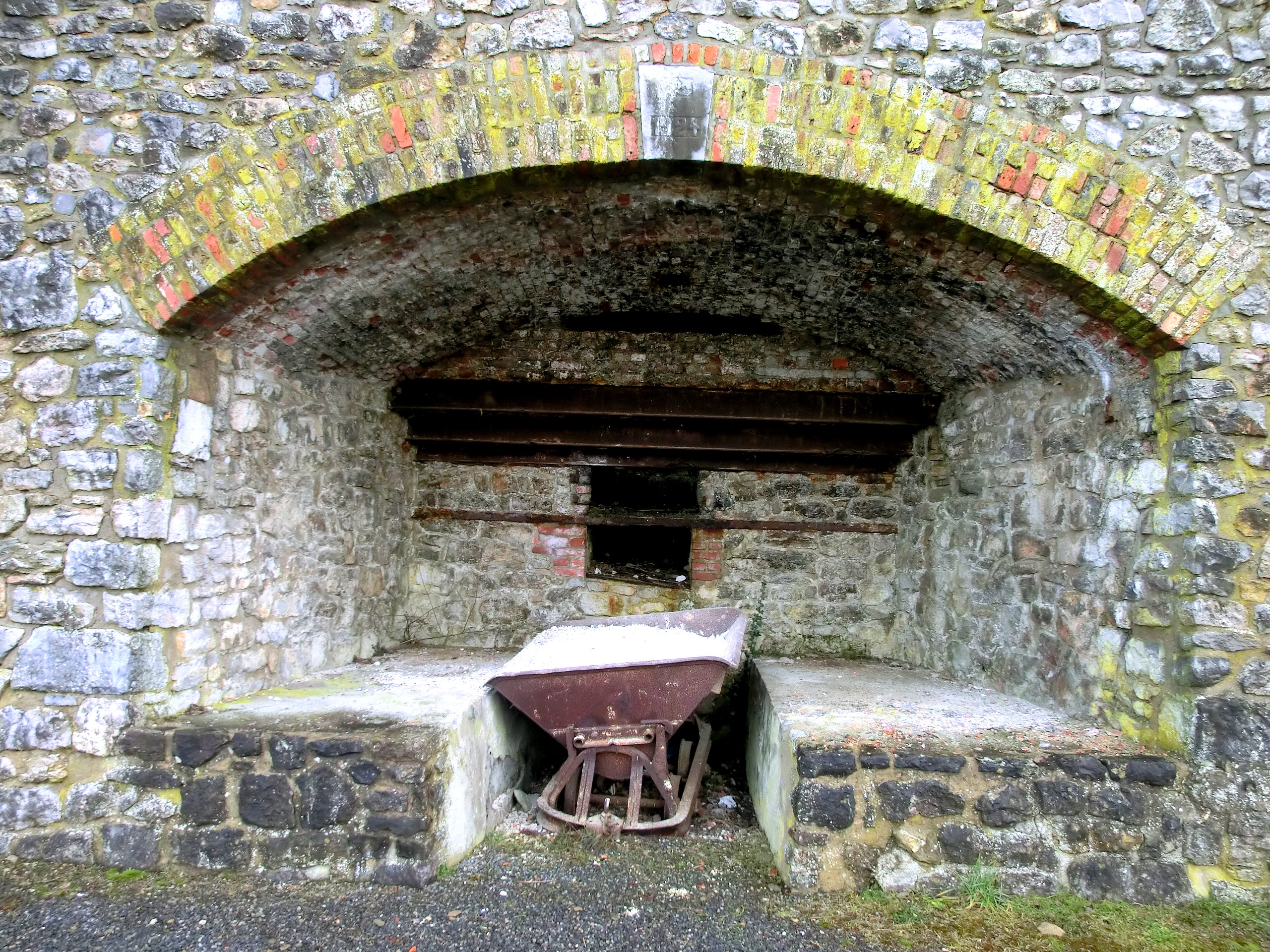
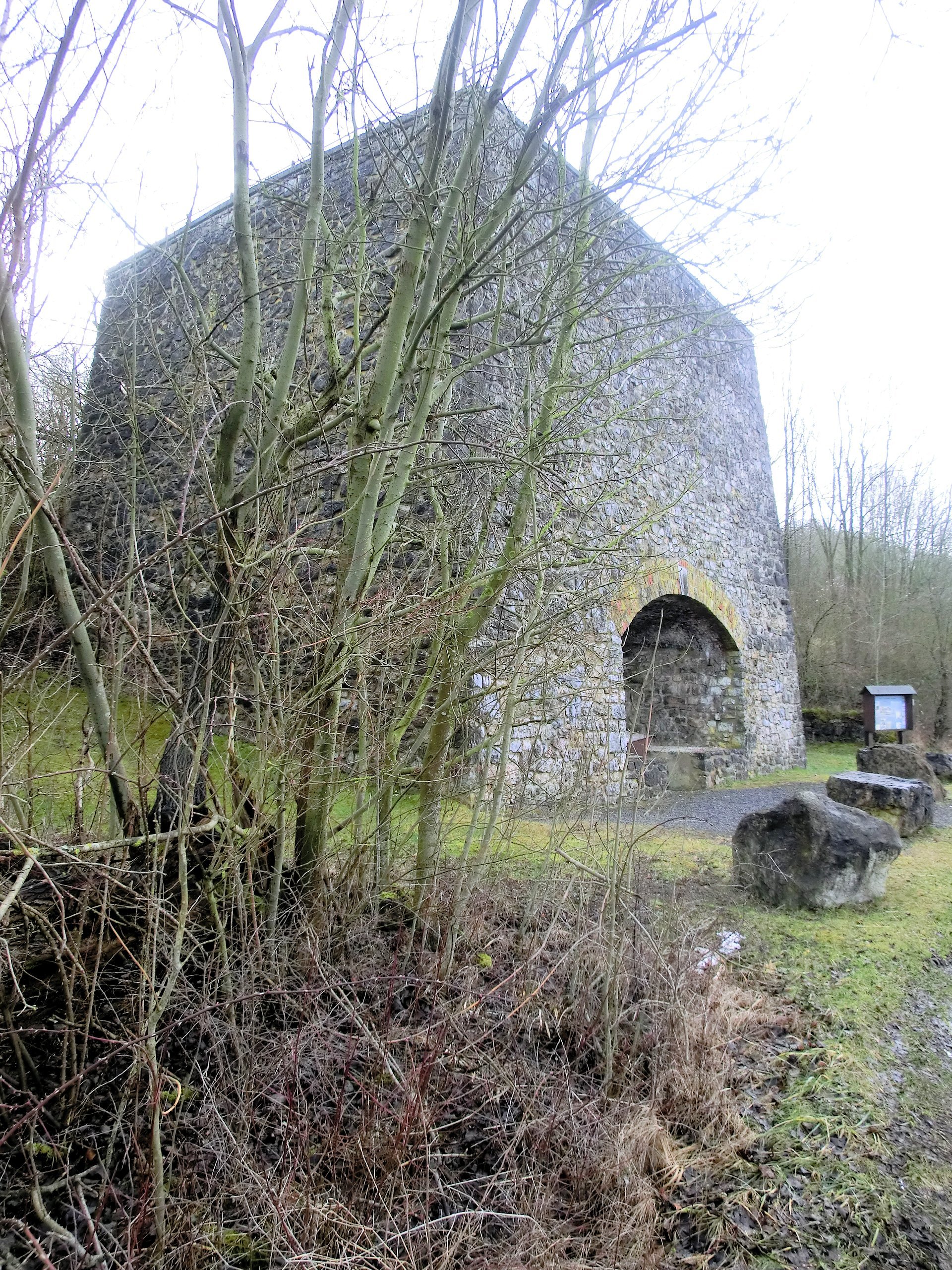
Just half a century ago the woods along the Inde were a scene of great industry and human endeavour. The river valley, at this point, follows a broad band of Devonian limestone which was deposited in shallow, tropical seas some 350 million years ago. In recent centuries, these deposits  were extensively quarried to provide “bluestone”, a type of limestone used locally for house construction and as a source of lime for agricultural fertiliser. Industrial monuments including old lime kilns, workshops and bluestone pits, lie scattered along this whole section of the Inde Valley.

CIMG8279

Looking at the sites from where the stone has been extracted, it seems hard to believe that this industry was still active only 50 years ago. Since then trees such as birch, hazel, ash, hornbeam, sycamore, wild cherry and pine have quickly colonised the heavily disturbed and impacted soils, creating an apparent wilderness feel, in, what is in reality, a heavily altered landscape. The quarries still contain fascinating reminders of their geological past; on one trip my family found fossilised shells and brachiopods which date back to hundreds of millions of years ago when these creatures thrived on coral reef ecosystems. In the short frame of a human lifespan, it is difficult to comprehend how the plates of the earth’s crust move our continents around the globe, powered only by our planet’s internal heating system.

CIMG8184

CIMG8186

It’s possible to explore several of the old kilns themselves and to see the impressive ovens into which the raw material was loaded before being later extracted, in its processed form and then loaded into waggons underneath. During the industry’s heyday, this would have been a noisy, dusty and harsh environment. Working conditions would have been tough for the men that worked there and who toiled there day-in and day-out to extract and then process the limestone. The site would also have been much more open and exposed than at present, being dominated by barren spoil heaps of quarried stone and waste material from the lime extraction process.

CIMG8196

CIMG8217

CIMG8205

Today the site is now a local nature reserve under the management of NABU, a national conservation organisation. As you enter the site, somewhat draconian signs entitled “NIX”, announce a whole rang of activities which are essentially “verboten”; whilst I agree with the sentiments, perhaps this could be said in a slightly more friendly way, with a greeting and welcome introduction for visitors to the site (as is the norm in the UK).

CIMG8232

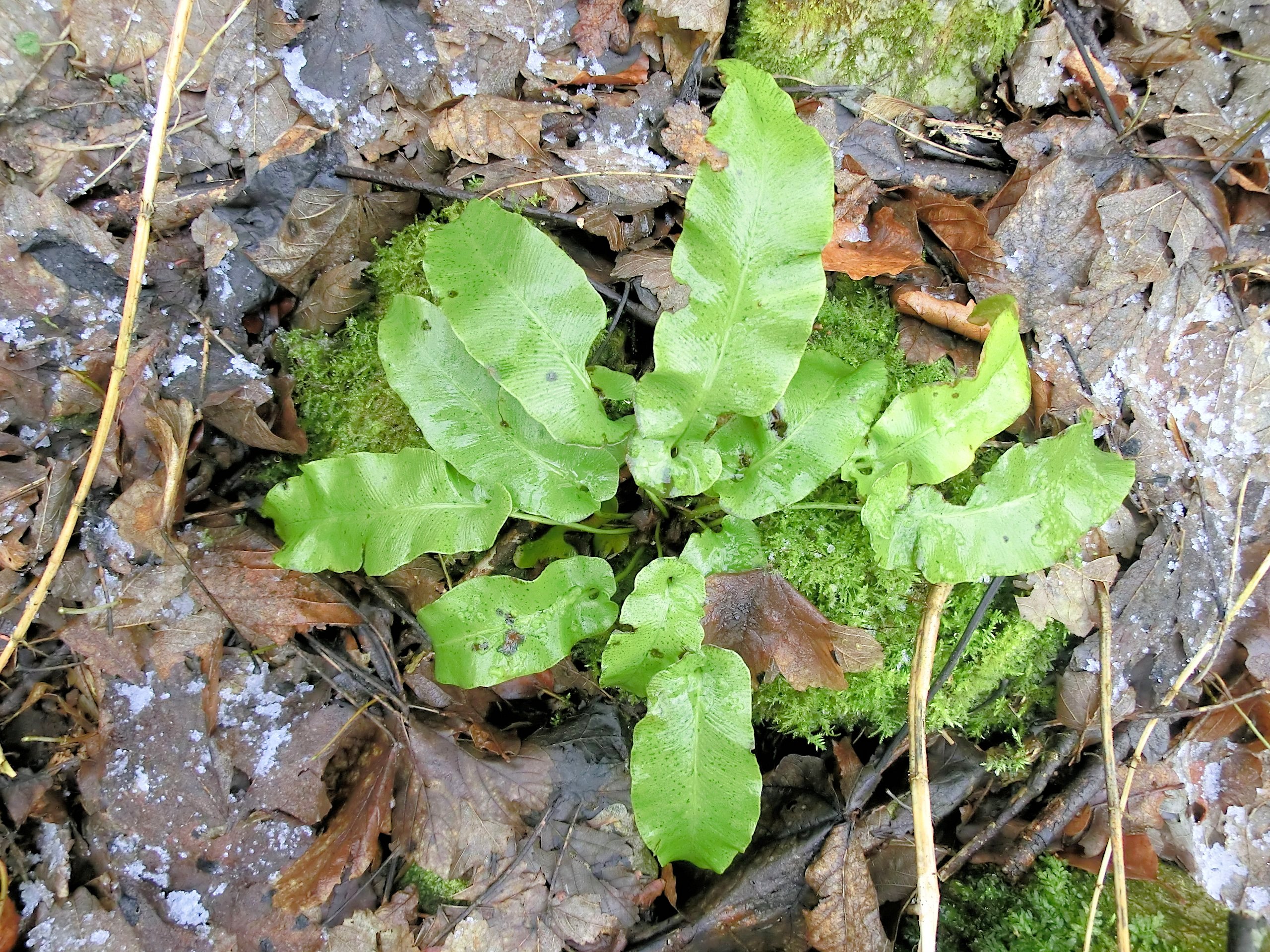
Once inside these lime rich woods, however, you can quickly loose yourself in the primordial forest and appreciate the amazing diversity of nature in, what is in effect, a comparatively small geographical area. There is a fascinating ground flora compromising of a rich carpet of mosses, liverworts and lichens. Dense strands of ivy carpet the woodland floor and cloak the decaying trees and branches of standing dead trees. The abundance of this deadwood provides a home for fungae and for a myriad of saproxylic species including beetles, centipedes and woodlice. These in turn provide a food source for woodland birds including woodpeckers, tree creepers and nuthatches. Interesting plants such as cuckoo pint (lords and ladies) which are relatively scarce in the UK, appear relatively common in these lime-rich woods.

CIMG8212

CIMG8215

CIMG8273

CIMG8282

In some areas of the wood there are also impressive old coppiced hazels which appear to have grown for many years without management. I suspect that these hazels would have specifically been managed to provide a source of timber for charcoal production which would have been used in the kilns during the lime production process. In reality however, a much greater area of woodland would have been required and it seems likely that coppice wood must have been imported from other local sites.

CIMG8226

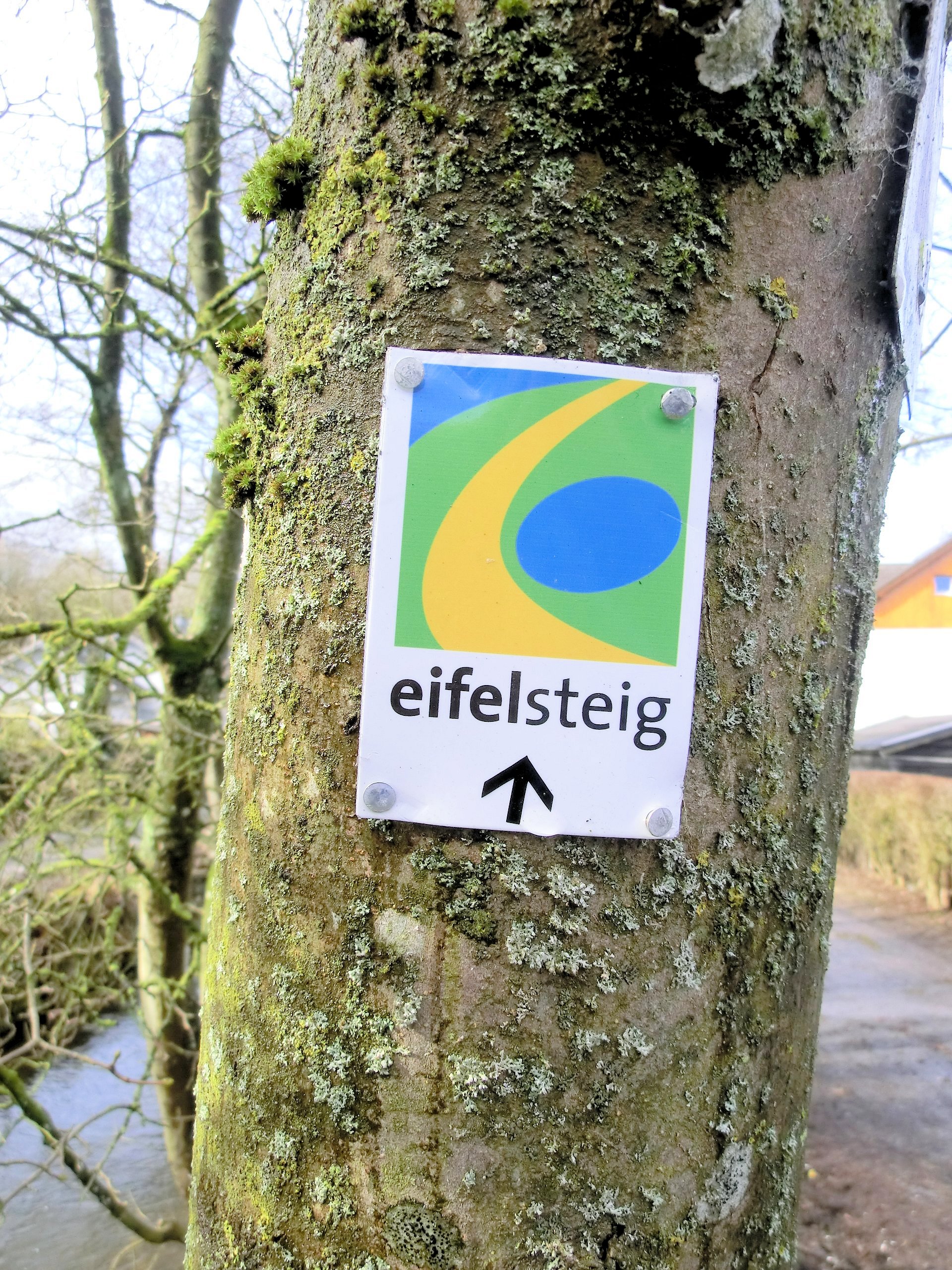
Continuing through the woodlands, you can follow the “Eifelsteig” along the river Inde to the nearby village of Hahn. The Eifelsteig is a long distance path starting from nearby Konelimunster and running for some 350km through the rugged Eifel region between Aachen and the Roman City of Trier on the Mosel. In Hahn there are some further old limekilns to visit, one of which has been superbly restored as an industrial monument.

CIMG8237

CIMG8240

CIMG8254

CIMG8262

Another reason to visit the conservation village of Hahn though is to appreciate some of the uses of the local stone for building construction. For me, the beautifully constructed vernacular buildings are very reminiscent of the Cotswolds with their warm, honey coloured facades and welcoming proportions, constructed using a variety of stone from local sources. Many of the old buildings also feature large archways for carts which have often been converted in into conservatory type features for extra living space. The surrounding villages of Breinig, Venwegen, Schmithof and Rearen (in Belgium) all feature many old buildings using the local limestone. Some of the bluestone also features in parts of Aachen’s cathedral.

CIMG8269

CIMG8270

I was also surprised to come across what appears to be a “Camperdown Elm” growing in the village of Hahn. This is a rare cultivar of Wych Elm which was originally discovered by David Taylor, forester to the 1st Earl of Camperdown, growing wild in Camperdown Park in Dundee. During my days working as a woodland officer in Dundee, I received reports from as far apart as New Zealand and the US documenting examples of this unusual tree growing in gardens and botanical collections; yet another quirky connection with the past and evidence of how our world becomes ever globalised.  The Inde valley and its bluestone pits serves as a reminder of simpler days when most raw materials were extracted and utilised within just a few square miles of their source.
CIMG8242


Posted in Aachen & Euregio, History & Culture, In Europe, Trees & Greenspaces, Wild Places | Tagged , , , , , , , , , , , , , , , , , , , , , , | Leave a comment

Meeting a Himalayan Legend: the Man who Conquered Everest

Mountain tourism in Nepal has been very much in the spotlight recently following the tragic deaths of 16 Sherpa guides on Everest last April. In October last year, unseasonal snow storms in the Annapurna region accounted for a further 43 deaths, including many trekkers from around the globe. These incidents highlighted long-held concerns about the over-exploitation of the Nepal Himalayas and the incredible risks placed upon the Nepali guides who serve the ever-growing commercial aspirations of adventure tourism operators. The situation was most graphically illustrated by Ralf Dujmovits’ 2012 pictures  from Everest which unbelievably showed a ‘human snake’ of 600 climbers ascending the mountain.

Everest 619012015

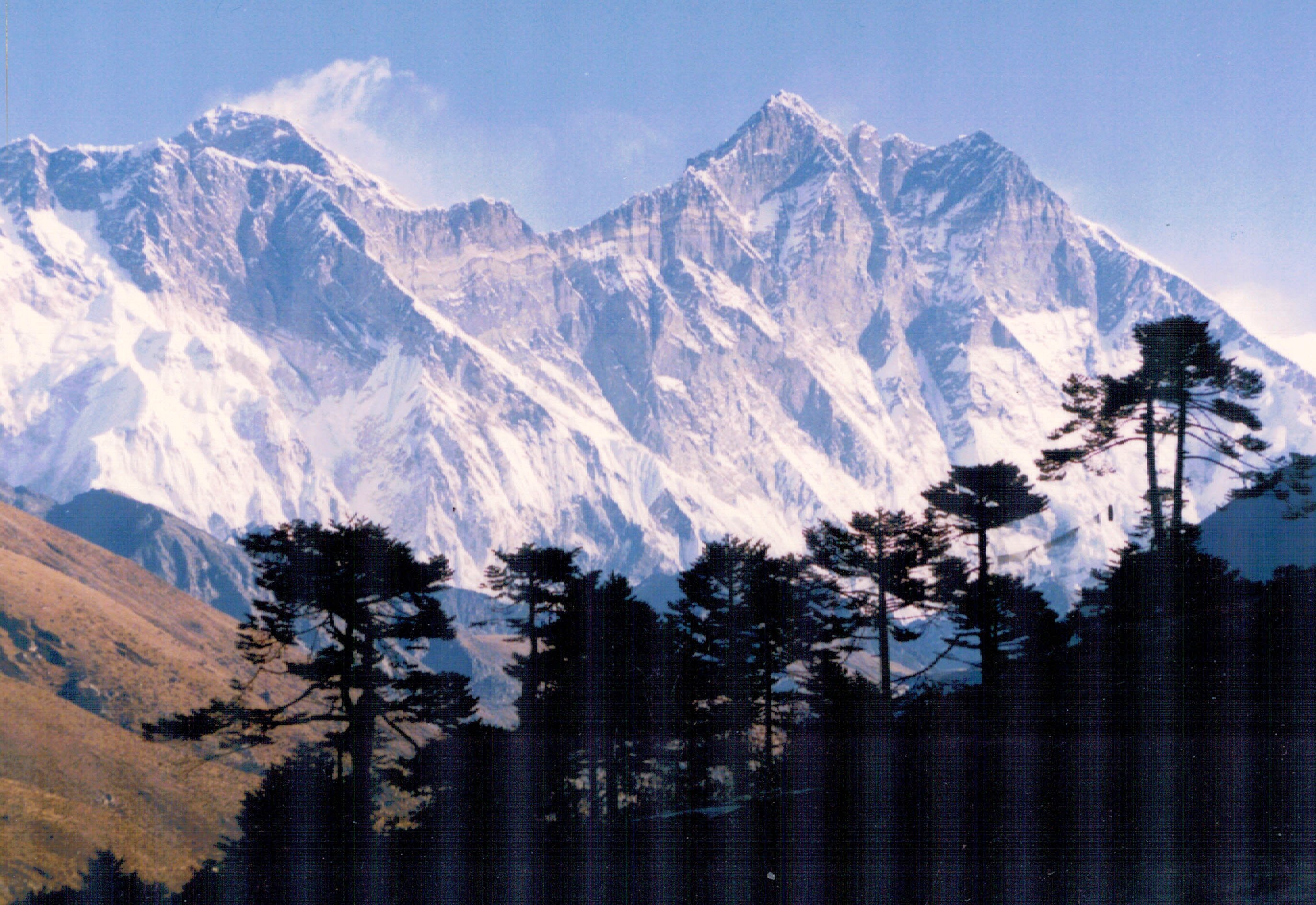
Mt. Everest peeping over the Lhotse Ridge from Tengboche

This is a far cry from the early days of Everest exploration. When Edmond Hillary and Tenzing Norgay first scaled the peak in 1953, the region had been effectively closed off from the rest of the world. The life of the Buddhist Sherpa inhabitants of the Khumbu had remained virtually unchanged for generations and mountain peaks, including Everest (or Chomolunga in Tibetan), were considered to be sacred places and the abode of the gods alone; there was certainly no question of the Sherpas wanting to conquer these high places for personal prestige. Following the ascent of Everest, however, all this started to change as the region opened up to climbing expeditions and then to trekkers who appeared in ever-increasing numbers.

Everest 1319012015

A Sherpa Hamlet on the trail to Gokyo

The adventure tourism boom brought significant benefits to the Sherpa people who were able to earn wages of up to 5000 dollars a year (compared with the Nepal national average of only 700 dollars) in one of the world’s poorest countries. New schools, hospitals and airstrips were constructed in the Region, including the famous airport at Lukla. For the first time a new generation of Sherpa children were able to benefit from educational and employment opportunities far from their homeland. However the stream of visitors also brought problems; these included deforestation, rubbish dumping, social inequalities and the decline of community cohesion and agricultural systems. The creation of the Sagamartha National park in 1976 set out to address some of these problems, but in so doing, inadvertently created additional pressures including the intensification of environmental impacts from deforestation outside the park boundary.

Everest 514012015

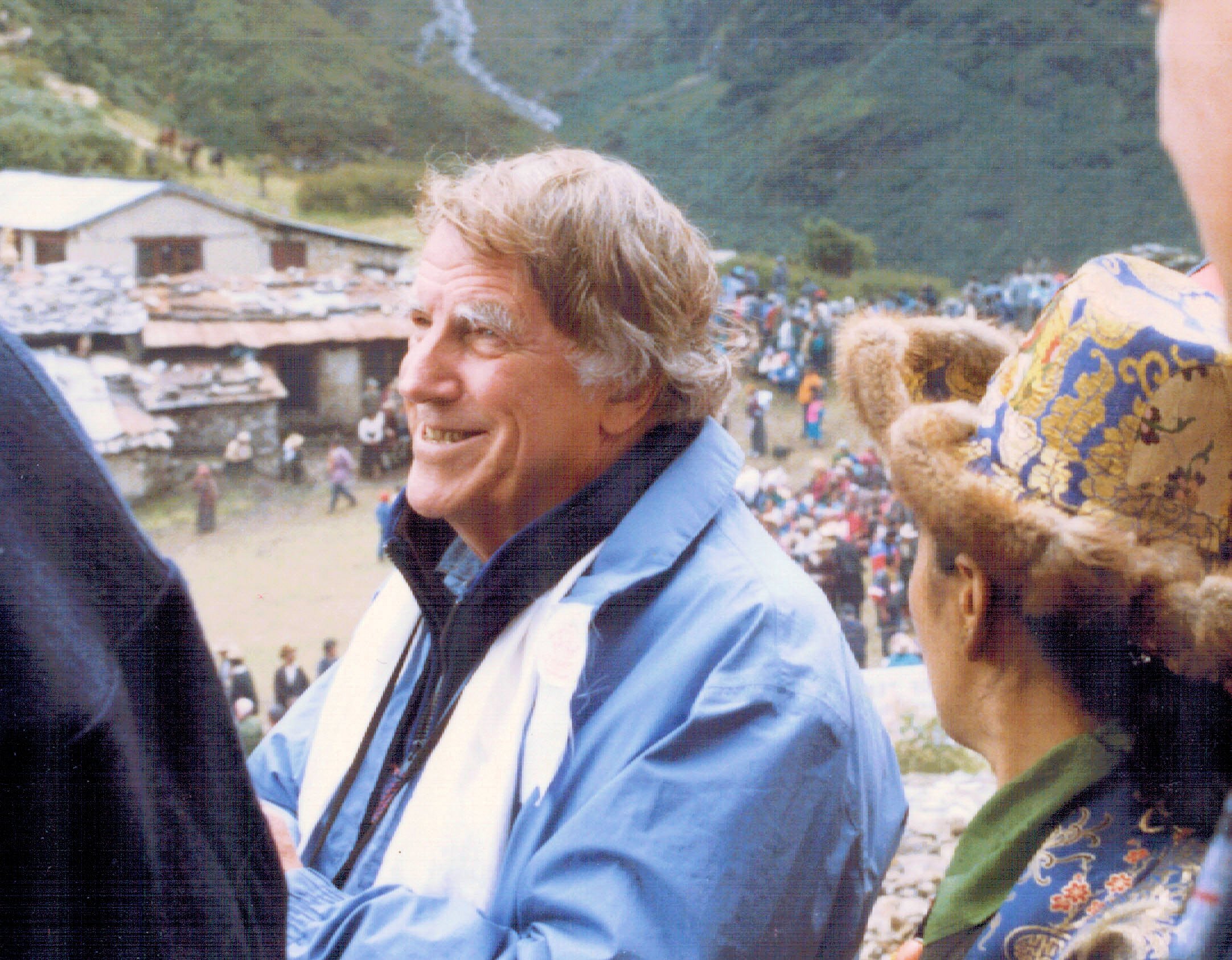
“Sir Ed” – Hero of the Khimbu Region

It was with these issues in mind that Sir Edmond Hillary set up the Himalayan Trust to tackle some of the inequalities and challenges facing the Region. “Sir Ed” (as he affectionately became known) worked tirelessly up until his death in 2008 to improve the lot of the Sherpas and to gain greater recognition for these hardy mountain people, whose achievements, have sometimes been overshadowed by the self-aggrandizing accounts of an egotistical mountaineering elite.

Back in the early 1990s I was fortunate to have the chance to work as a forester in Nepal with British volunteer agency VSO (Voluntary Service Overseas) and jumped at the opportunity to live and work in the Himalayas for two years. After working for some months in the Middle Hills District of Dhading, I was transferred to Solu Khumbu, where I was based in Phaplu just South of  the Everest Region. It was here that I got the chance to become involved in reforestation and community forestry projects with the indigenous Sherpa people of the region. This included work initiated by Edmond Hillary’s Himalayan Trust to develop tree nurseries and sustainable forestry in a buffer zone just South of the Sagamartha National Park; particularly around Lukla where the human impact on the forest from trekking and tourism had been the greatest due to tree felling restrictions within the National Park.

Everest 114012015

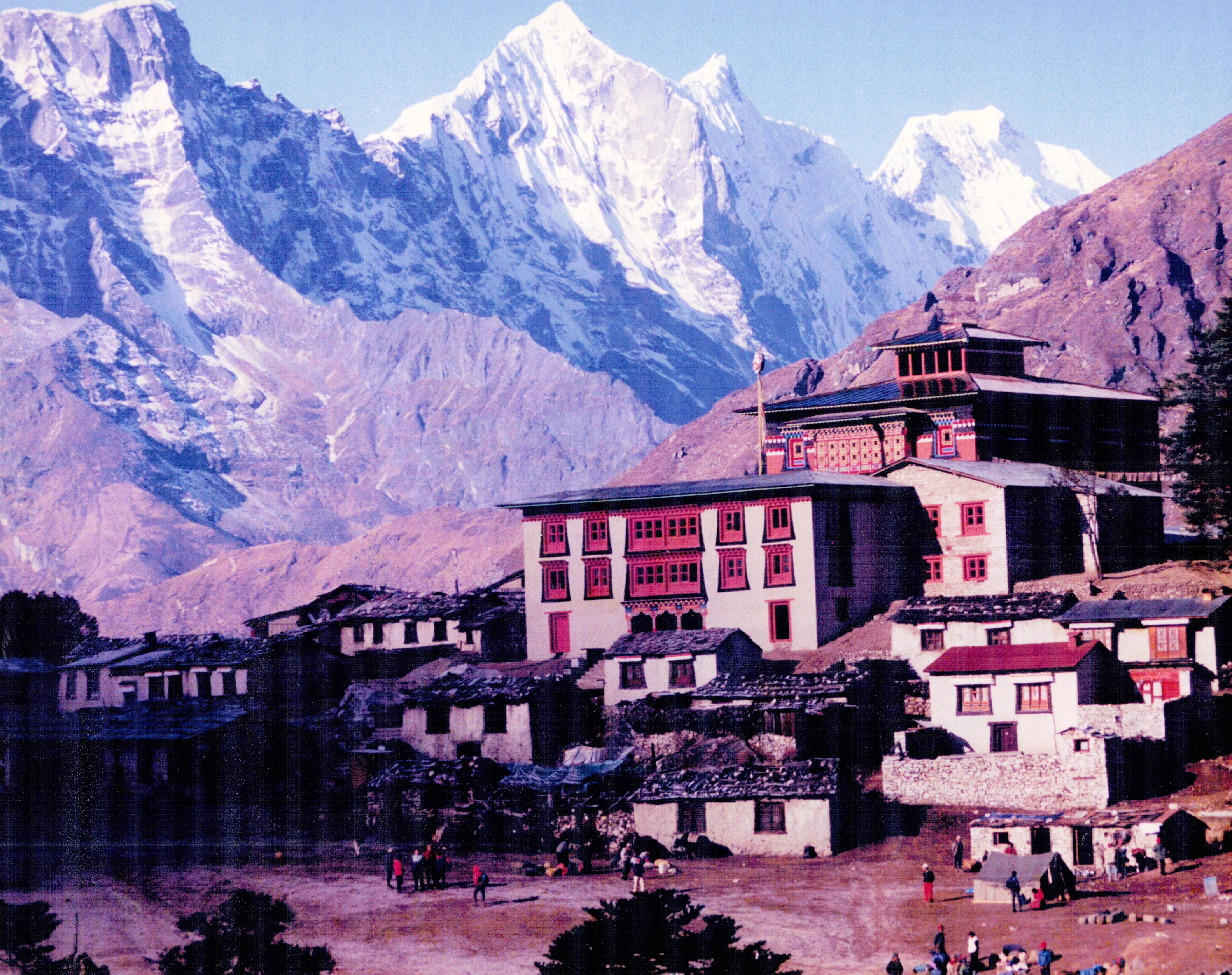
Tengboche Monastery prior to the reopening in 1993

While I was there I got the chance to meet “Sir Ed” at the reopening of the Tengboche Monastery, the iconic Buddhist temple on the trekking route to Everest Base Camp which had been burned down by a fire in 1989; later to be reconstructed and then reopened in 1993. Traditionally, all Everest climbing expeditions have stopped at Tengboche to receive the blessing of the Abbot for their mountaineering endeavours.

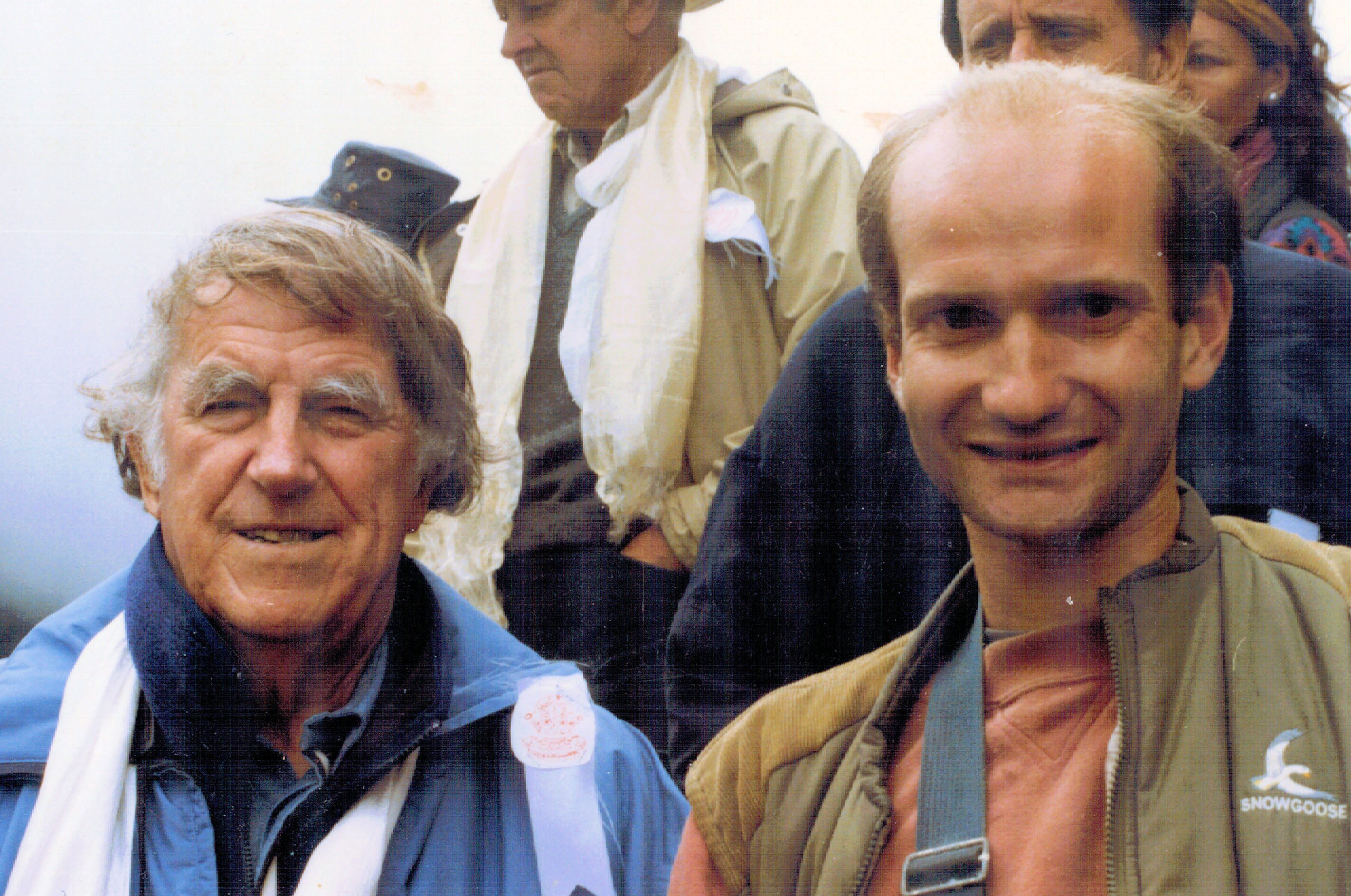
On this occasion Sir Edmond Hillary had been flown in by helicopter specially for the reopening ceremony. Ironically, the man who first summited Everest (and then in his mid 70s), was no longer able to remain at high altitude for more than a few hours on medical grounds. As the monstrous ex-Russian Army helicopter lurched out of the clouds and thudded down in an ungainly fashion on the grassy meadow at Tengboche, it was clear from the excitement of the crowd that somebody very important indeed was arriving. Despite this (and the fact that “Sir Ed” was very much the man of the moment) I had the chance to chat to him informally after the official proceedings were concluded. We talked about the reforestation work in the Khumbu Region and the pressures generally facing the Sherpa people and the Region. I found him exceptionally approachable and without any of the normal sense of ego that normally goes alongside fame. Despite high altitude experiences, Sir Ed had clearly kept his feet on the ground !

Everest 314012015

A youthful me meets a youthful (in spirit) Sir Ed

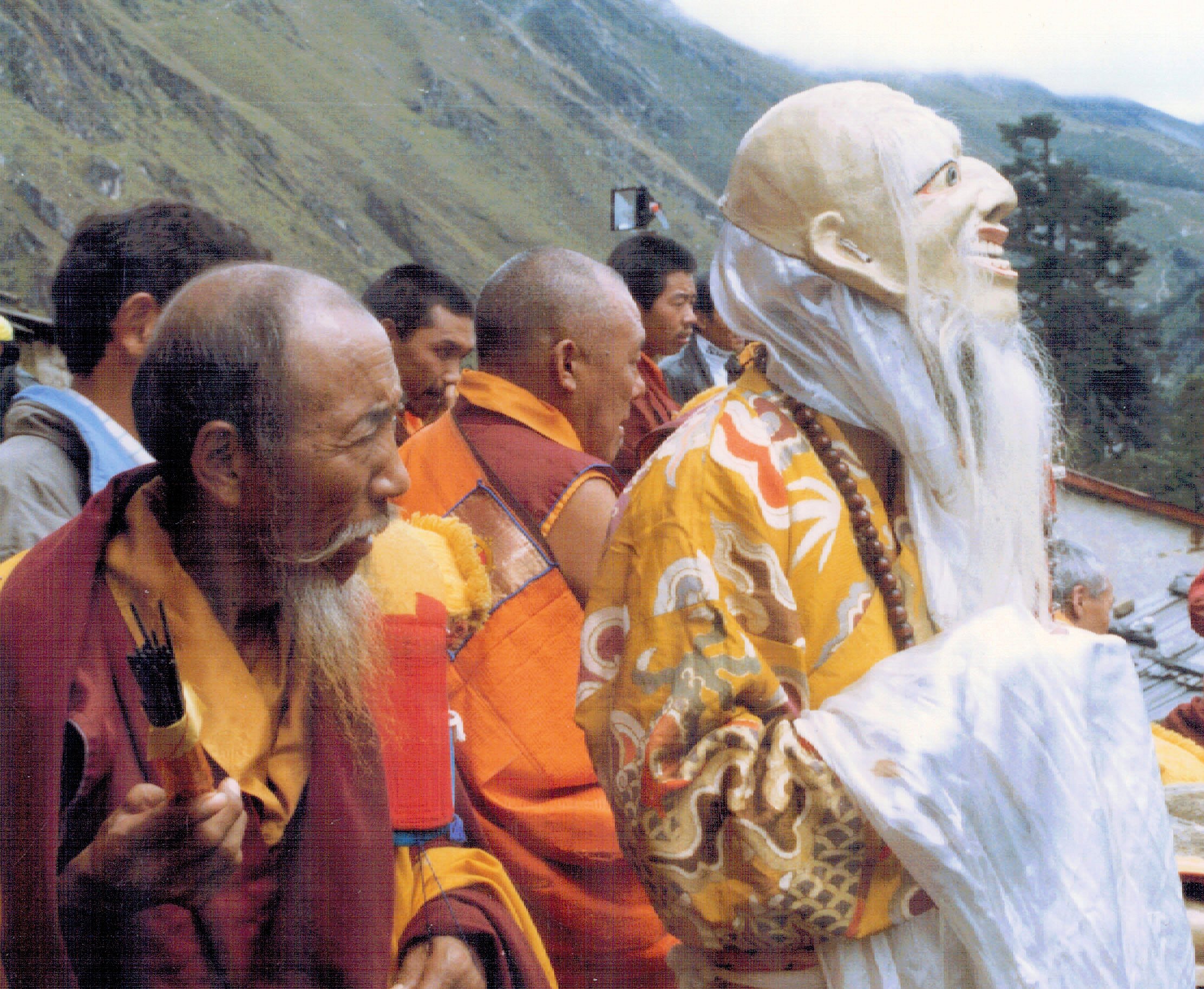
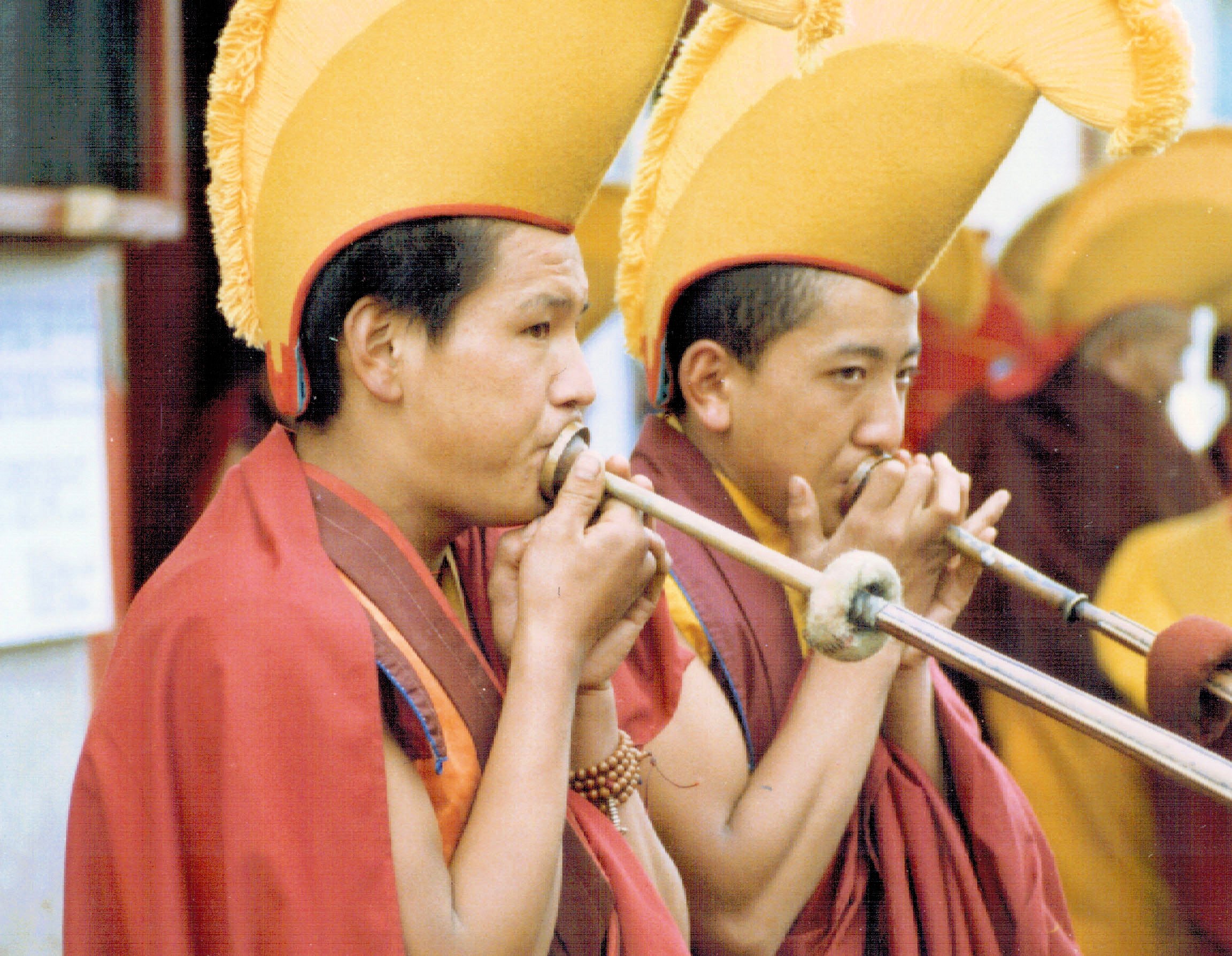
The reopening of the Monastery was a highly colourful affair with much pomp and ceremony from the Tibetan Buddhist establishment. One highly venerated reincarnation of a revered Lama (resembling the Dhali Lama himself) caused quite a stir as crowds jostled to receive the blessing of this senior orange-robed dignitary. Masked dancers also performed traditional Mani Rindu dances, which have traditionally been performed by monks in the Khumbu Region to celebrate the triumph of  Buddhism over the pre-Buddhist Bon Po religion of Tibet. A somewhat unharmonious cacophony of sounds were emitted from long Tibetan prayer trumpets, brandished by yellow hatted monks.

After the official and Buddhist ceremonies were completed, the real party was able to start. The Sherpas know how to let go and enjoy themselves and any gathering is usually a good reason to consume copious quantities of “chang” (or home-made rice wine). Needless to say though the festivities continued through the night with traditional Sherpa dancing and drinking of “chang” until daylight; the Sherpas certainly do know how to party ! Some of the less pious monks even literally got into the “spirit” of things with 2 somewhat inebriated examples even getting into a scrap over whose Monastery was the best; I’m not so sure that the Buddha would have approved (but hey anything goes in Sherpa land !).

Everest 614012015

Masked dancers and Tibetan monks

Everest 1619012015

Tibetan Buddhist Trumpets

The meeting with “Sir Ed” was just one highlight in a 2 and a half-year stint as a VSO volunteer in Nepal. For much of the time I was based in the picturesque village of Phaplu and worked with the Government forest office located in the District centre of Salleri. My job there was to work with local Nepali staff in the field to develop the Community Forestry programme. This involved working with the forest rangers to develop forest management plans in partnership with local communities. Previously the forests had been under  state control with the rangers acting in a strict “policing” role.  This however, was found to be unsuccessful and created antagonism between the forest department and villagers who depended upon the region’s forests for their own livelihood. Local people who were caught harvesting wood without permission could be fined or even imprisoned and the old system sometimes encouraged corruption and extortion of money from (occasionally) less than scrupulous members of staff.

Everest 1519012015

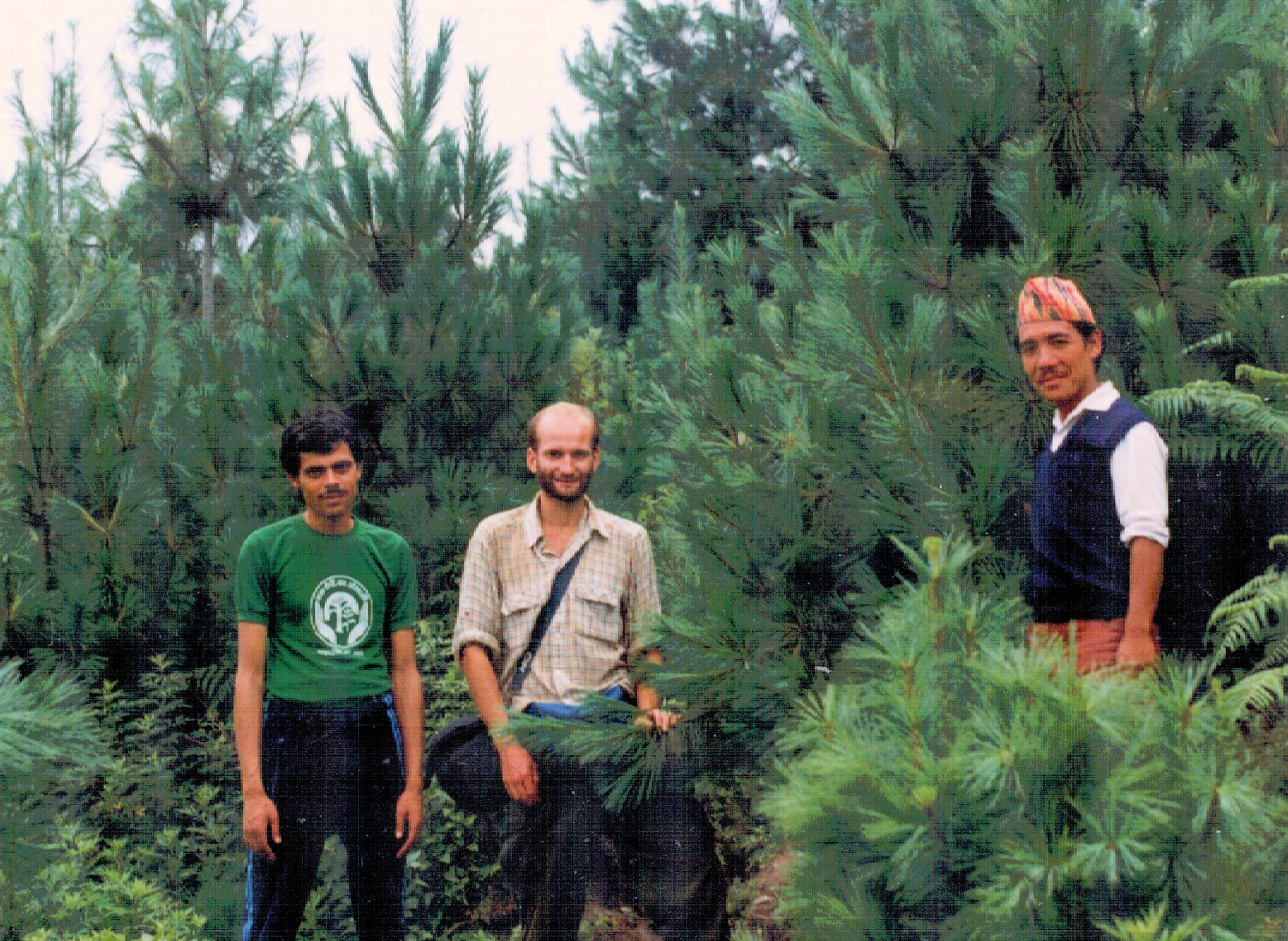
Bearded “mountain man” with Nepali colleagues

The idea of the community forestry programme was to hand control back to local people through the establishment of forest user groups. Tree nurseries were also established around the District to encourage new planting and to reverse trends towards forest degradation. The work, however was far from straight forward as rangers effectively had to be retrained from their traditional “policing ” roles  to a more proactive role as a development workers and agents of change; this transition did not always come easily.

Sometimes the newly established plantations were of inappropriate species or were protected at the expense of existing areas of natural woodland which could have been better managed. Many of the forest rangers came from other parts of Nepal which made it difficult sometimes for them to be accepted and trusted by the local communities with whom they worked. Consequently at worst some management plans existed only on paper. At best however there were motivated and enthusiastic members of staff who were able to get things moving with successful results.

Everest 1119012015

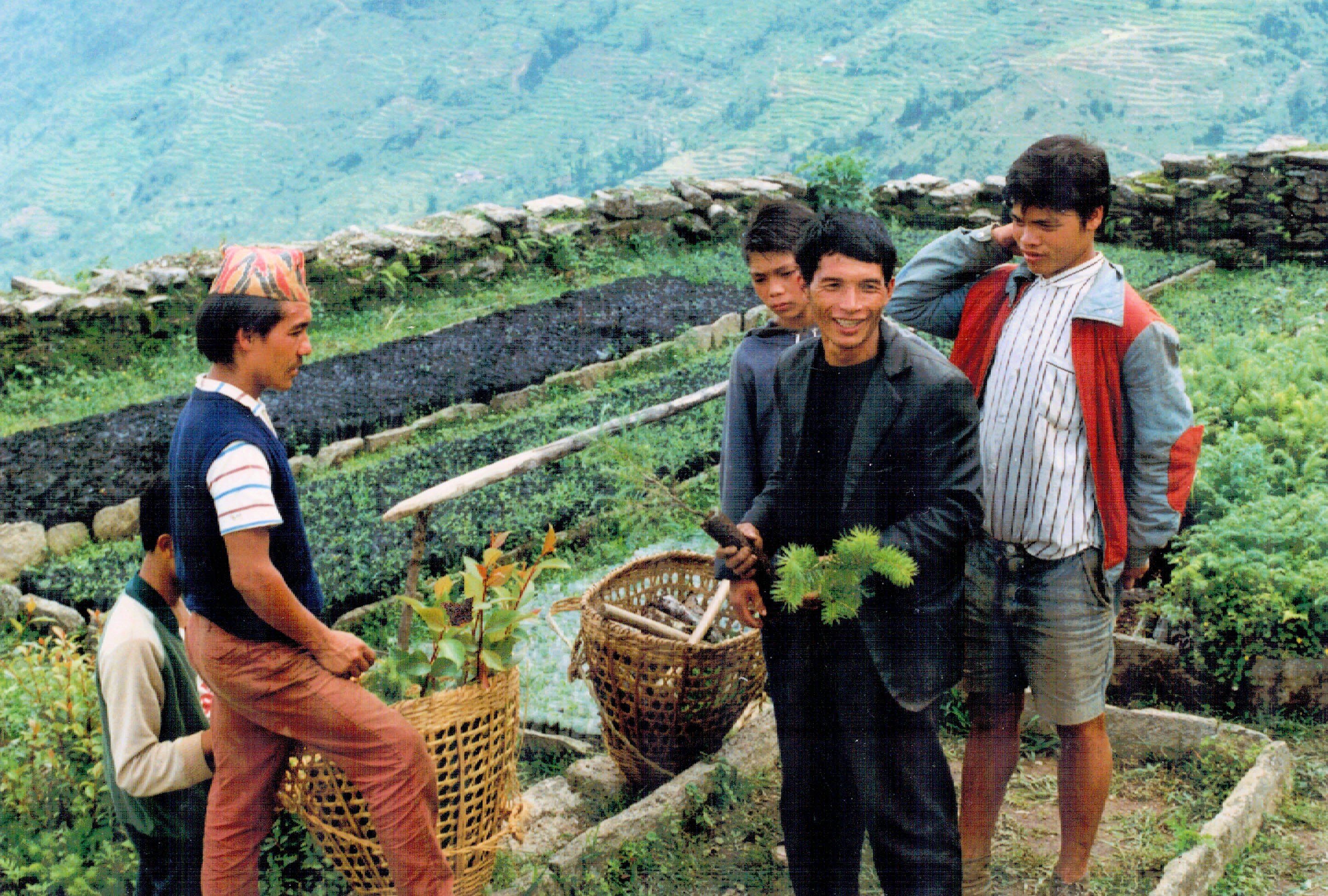
Nepali colleagues take trees for planting

Everest 1219012015

Sherpini girls collecting leaves from the forest for fodder

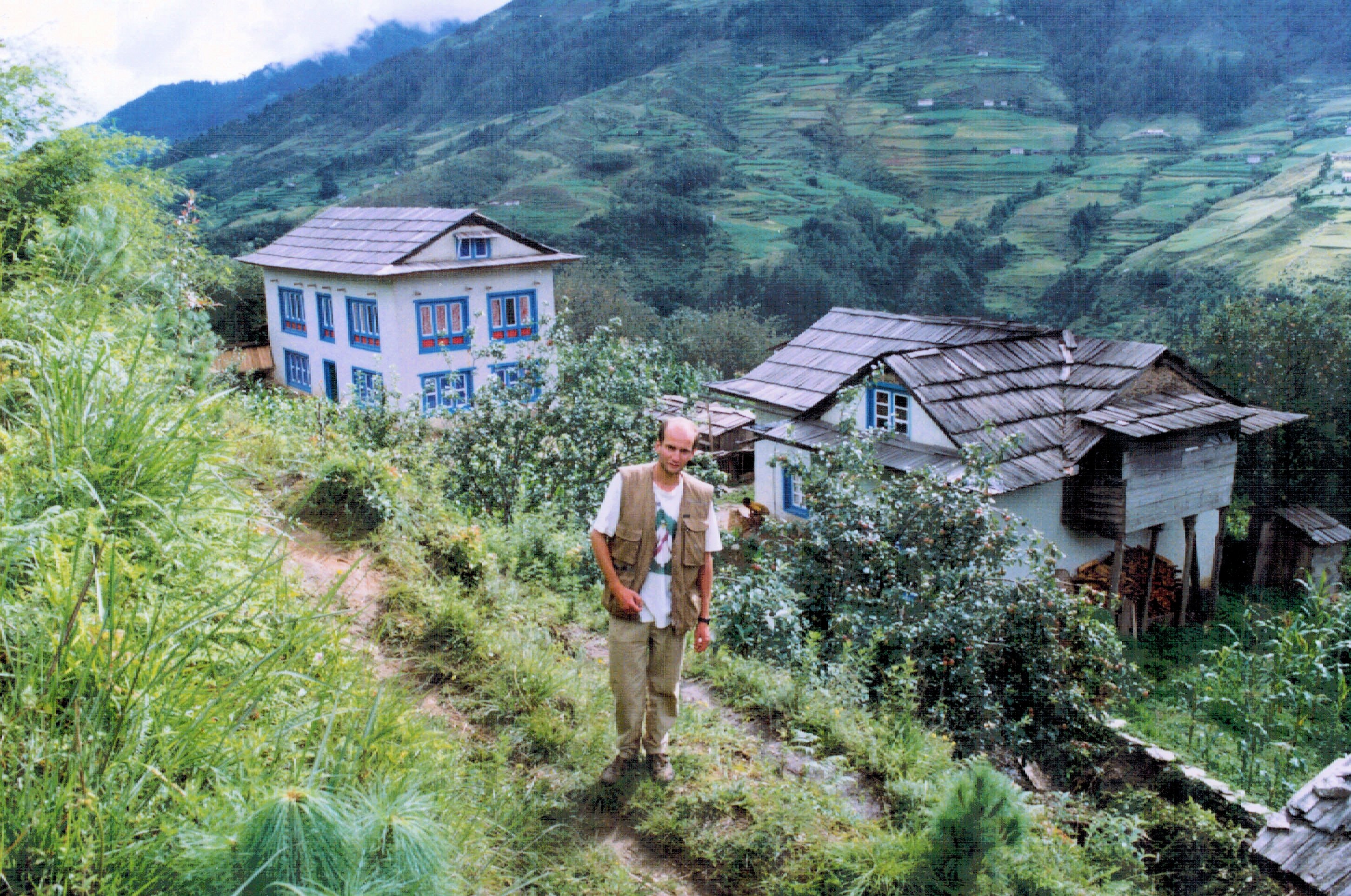
Difficulties aside, one of the great things about being in Nepal was just being able to live in a different culture and to enjoy participating in local events and festivals. I lived in a wonderful “chocolate box” Sherpa house within a beautiful valley at an altitude of 2500m  and with a view out the window to 7000m snow-capped peaks at the head of the valley. Around the house where I lived there was always something going on; whether it was harvesting maize or apples from the orchards, milking cows or making “raksi”, the potent (and vaguely illegal) moonshine produced by Nepalis  from all manner of products. Sometimes I would make trips to get potatoes or vegetables from my aging landlord (in the house next door) and be invited in for a “raksi” session, only to stagger out a few hours later. As far as drinking is concerned, “no” is not an acceptable answer in Sherpa culture and your hand will be literally wrenched from your glass if you don’t comply with this.

Everest 819012015

Mountain Home – my house (rear) for 2 years

Living conditions could at times be somewhat basic; I even had an outside squat toilet (a hole in the ground) where I could pick apples from inside as I went about my business. Nepali hygiene certainly left something to be desired. However, for mountain living, things weren’t too bad at all. I had electricity, friends living nearby, a beautiful location and a chance to participate in the life of a Himalayan valley. In Phaplu you had to expect the unexpected; one morning I was awoken in the wee small hours by people blowing trumpets and reciting incantations outside my house in the darkness. It later transpired that these were the local “ghost busters” who regularly visit every house in the neighbourhood to exercise bad spirits. Needless to say payment was expected…

Everest 1019012015

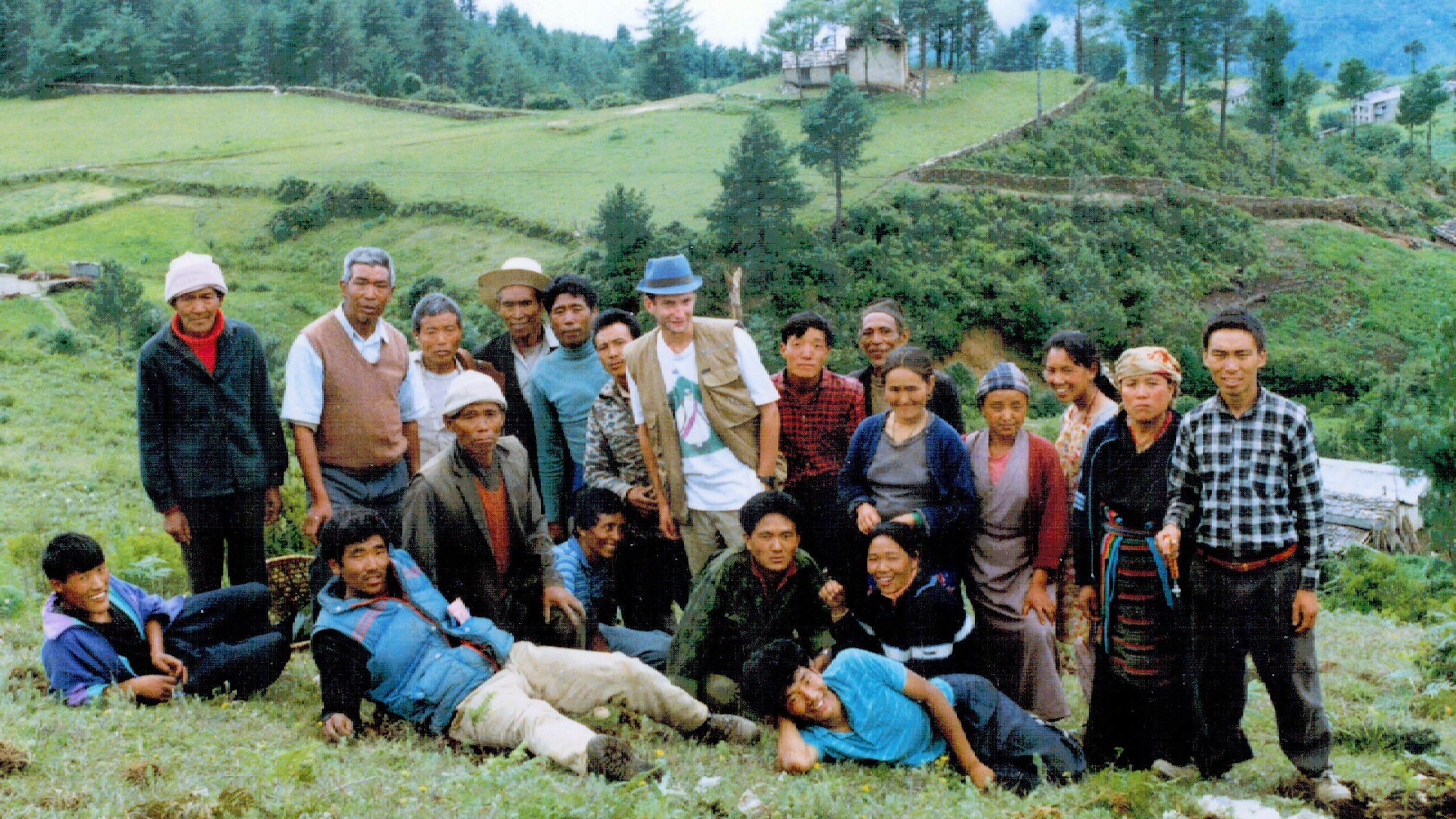
Local celebrity – me with my Sherpa friends.

Everest 719012015

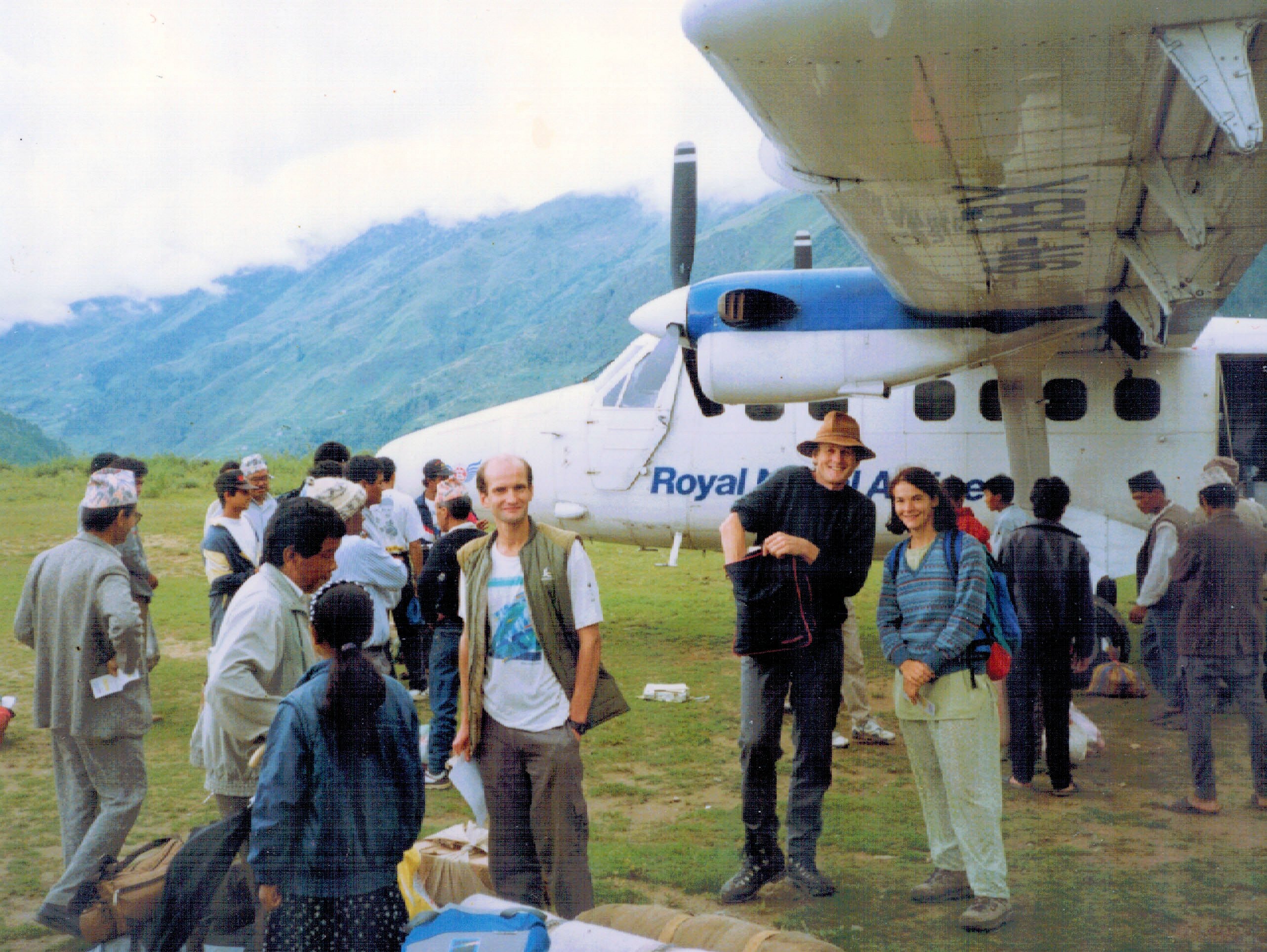
“Seat of the Pants” – flying into Phaplu could be a fun experience

Everest 919012015

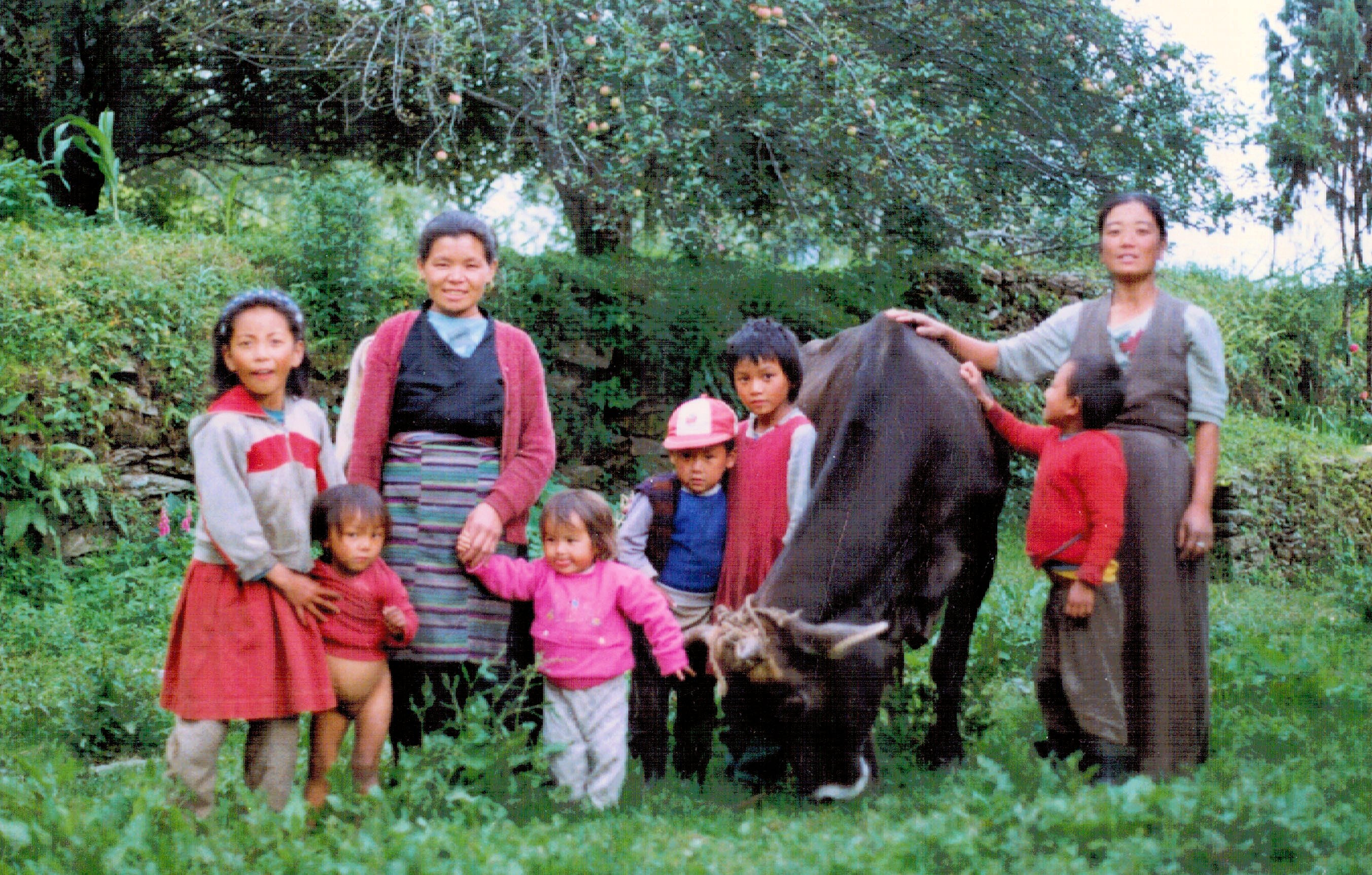
Meet the locals – some of my neighbours in Phaplu

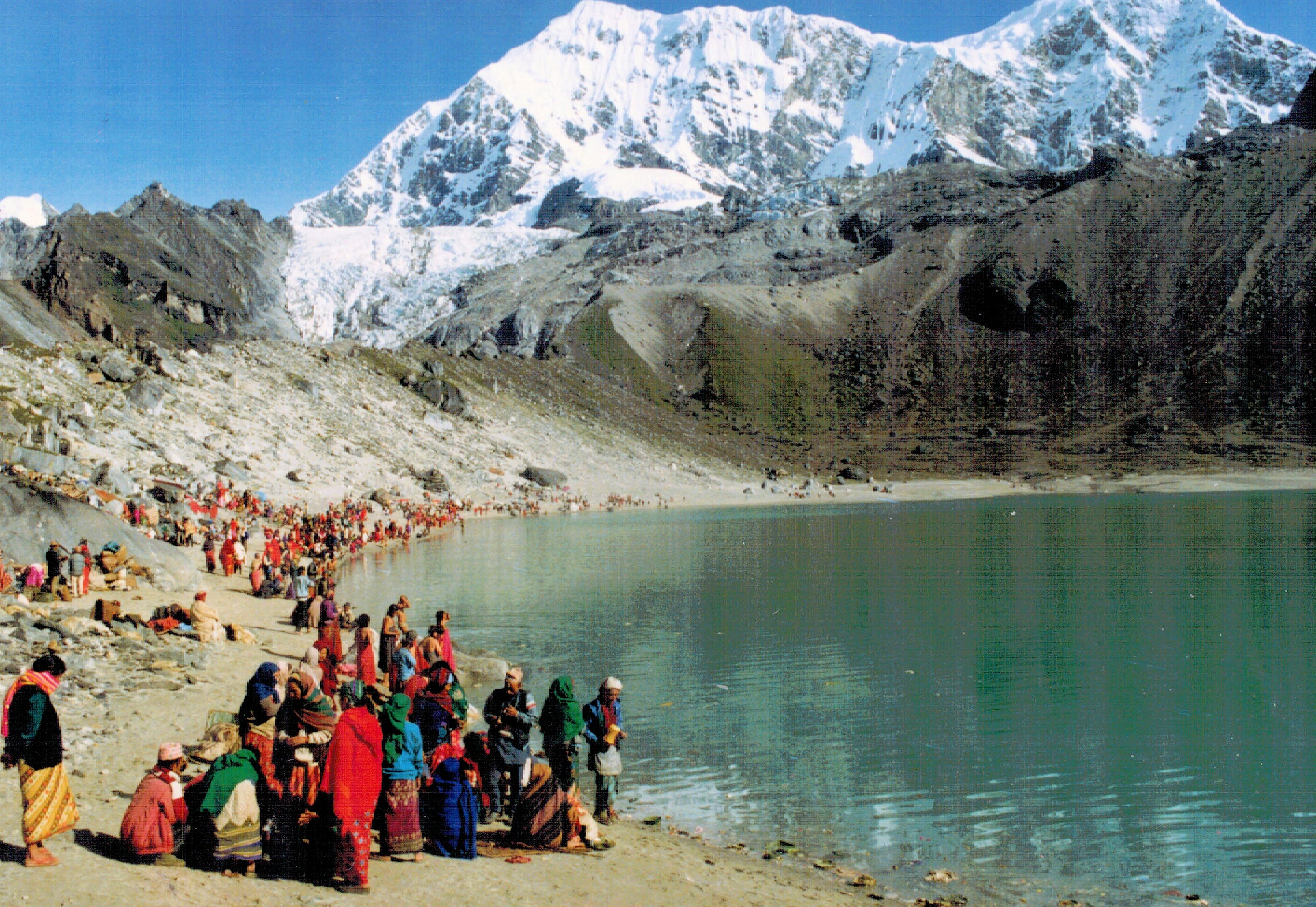
Some local events and festivities were really quite amazing including a mid summer pilgrimage to the Dudh Kunda lakes at over 5000m. This is a very sacred place for both Hindus and Buddhists.  Pilgrims (even into their 80s) sometimes walk for several days to circumnavigate and bathe in the lakes, ensuring good Karma and the chance of a better reincarnation. For the less pious there is also a wonderful and crazy all night festival with stoned sadhus chanting for Shiva, crazed shamans in full tantric flow and trendy young Sherpas ,with base-ball caps and ghetto blasters, all dancing the night away under the stars and the moonlit peaks of the Himalayas. Far down below and a world away, the flashes of distant electric monsoon storms illuminated the plains over India; a truly dramatic spectacle indeed.

Everest 1419012015

Place of Pilgramage – Dudh Kunda at 5000m

Just like the mountains of Nepal, the psychological highs and lows of living there compared with nothing I have encountered before or since.  Although the experience of living there was  not often an easy one, it was a period rich in experience which I still would not have missed the world.

Everest 214012015

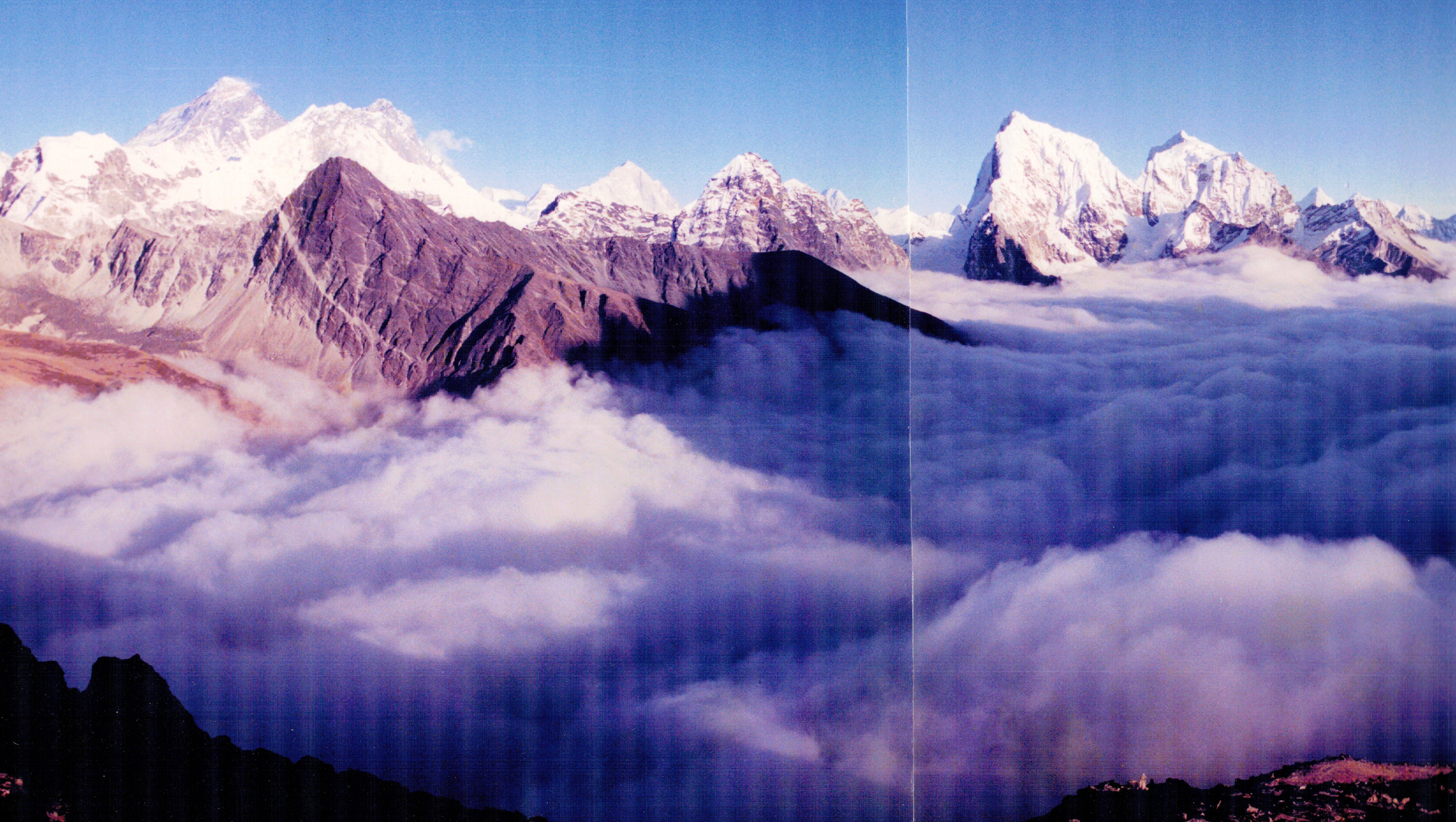
Contemplating the “Mother Goddess”: the view from Gokyo Ri, 5500m

Everest 414012015

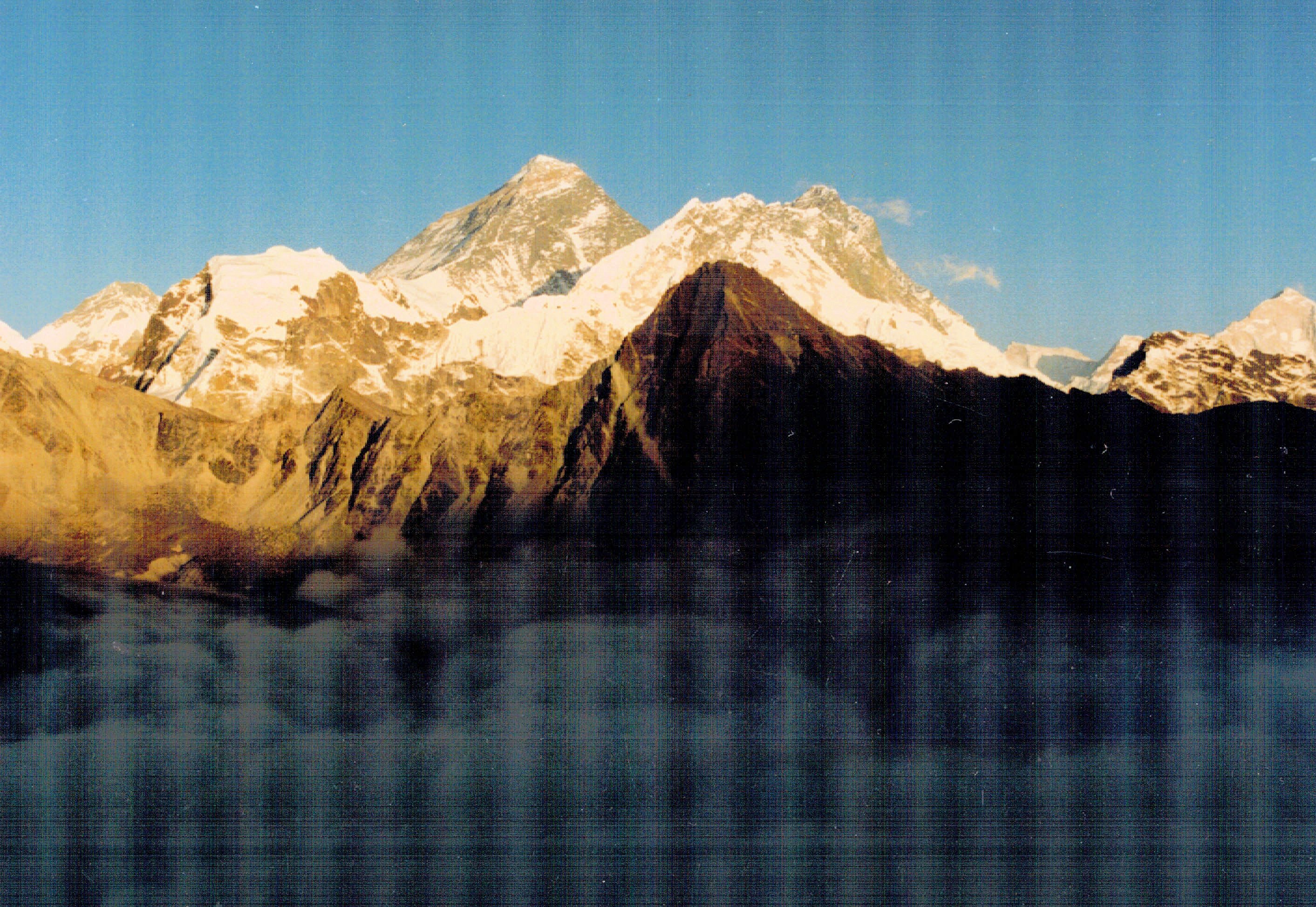
Sunset over “Chomolunga”

Postscript 4/05/15; Nothing could have prepared us for the shock of the severe earthquake which hit Nepal on the 25th April 2015. Although the earthquake epicentre was located in Gourka District to the NW of Kathmandu, the quake triggered significant avalanches which resulted in significant loss of life and injuries around Everest Base Camp to both Sherpas and international climbing teams. This however pales into insignificance when compared with the scale  of destruction across the Country as a whole, particularly in the Kathmandu Valley and in remote rural villages to the North and West of the Capital. Many remote villages have been virtually  destroyed leaving people homeless and deprived of basic needs including food, water and sanitation. In the Langtang Valley whole villages have simply been buried by landslides leaving no trace.

Providing immediate relief to shattered communities is proving challenging and is further compounded by poor communications and damaged infrastructure. Our thoughts are with the people of Nepal who face the enormity of the task of rebuilding their shattered homes, communities, temples and lives. For more information please see, friend and fellow VSO,  Gayl Kennedy’s  blog;

Heart-breaking and heart-warming updates from Nepal – May 2015

Posted in History & Culture, Mountain Treks, Trees & Greenspaces, Wild Places, World | Tagged , , , , , , , , , , , , , , , , , , , , , , , , , , , , , | Leave a comment

“Away With the Fairies” – The Legend of Doon Hill and Robert Kirk

As a child I spent many, happy summer Sundays sailing on my Dad’s boat at Loch Ard; a scenic forest-fringed loch, located in the Queen Elizabeth Forest Park within the Trossachs region of Scotland. In 2002, this area became part of Scotland’s first National Park, Loch Lomand and the Trossachs, covering an area of 720 square miles and including over 20 Munros (mountains over 3000ft) and 22 fresh water lochs.

Picture1

On the “Bonnie Banks” of Loch Lomand

On our weekly pilgrimage to Loch Ard we used to pass by the small tourist village of Aberfoyle and the nearby unassuming, rounded  summit of Doon Hill.  At that time, I was unaware of the significance of Doon Hill or the legends attached to it. However, some years later, I was fascinated to come across the story of the Rev. Robert Kirk, a 17th Century church minister, who reputedly came upon a magical realm of fairies and supernatural beings living beneath the Hill. Kirk documented his experiences on Doon Hill in his book; “the Secret Commonwealth of Elves, Fauns and Fairies”. The book was unpublished for many years but was rediscovered by Scottish writer, Sir Walter Scott and then published over 100 years after Kirk’s death in 1691.

Picture2

Doon Hill – Kirk’s inspiration

Kirk was an educated and accomplished scholar, having obtained a degree and doctorate from Edinburgh and St Andrews Universities. He is also credited with producing the first translation of the Bible into his native Gaelic language, which was at one time spoken widely throughout the Region. Kirk was brought up amongst the old traditions of the Highlands where belief in the “Little People” was commonplace. He saw nothing incompatible between his Christian beliefs and the supernatural and was indeed credited with having the “second sight” (being the seventh son of the family).

In his book, Kirk produced graphic accounts of his encounters with the fairies based on his nightly wanderings alone on Doon Hill (otherwise known as the Fairy Knowe or “Dun Sithean”  in Gaelic). He described in detail their customs, clothing, food and appearance.

Kirk’s corpse was found on the Hill following one of his night-time expeditions in 1692. It is most likely that he died of a heart attack, however the strange circumstances of his death helped to feed local speculation and gossip. Some believed that in exposing the faries’ secrets, Kirk had committed a great crime for which he was punished. Legends say that Kirk’s spirit is trapped forever within the trunk of the impressive, solitary Scots Pine tree which crowns the summit of Doon Hill.

Picture3

On the Fairy Trail

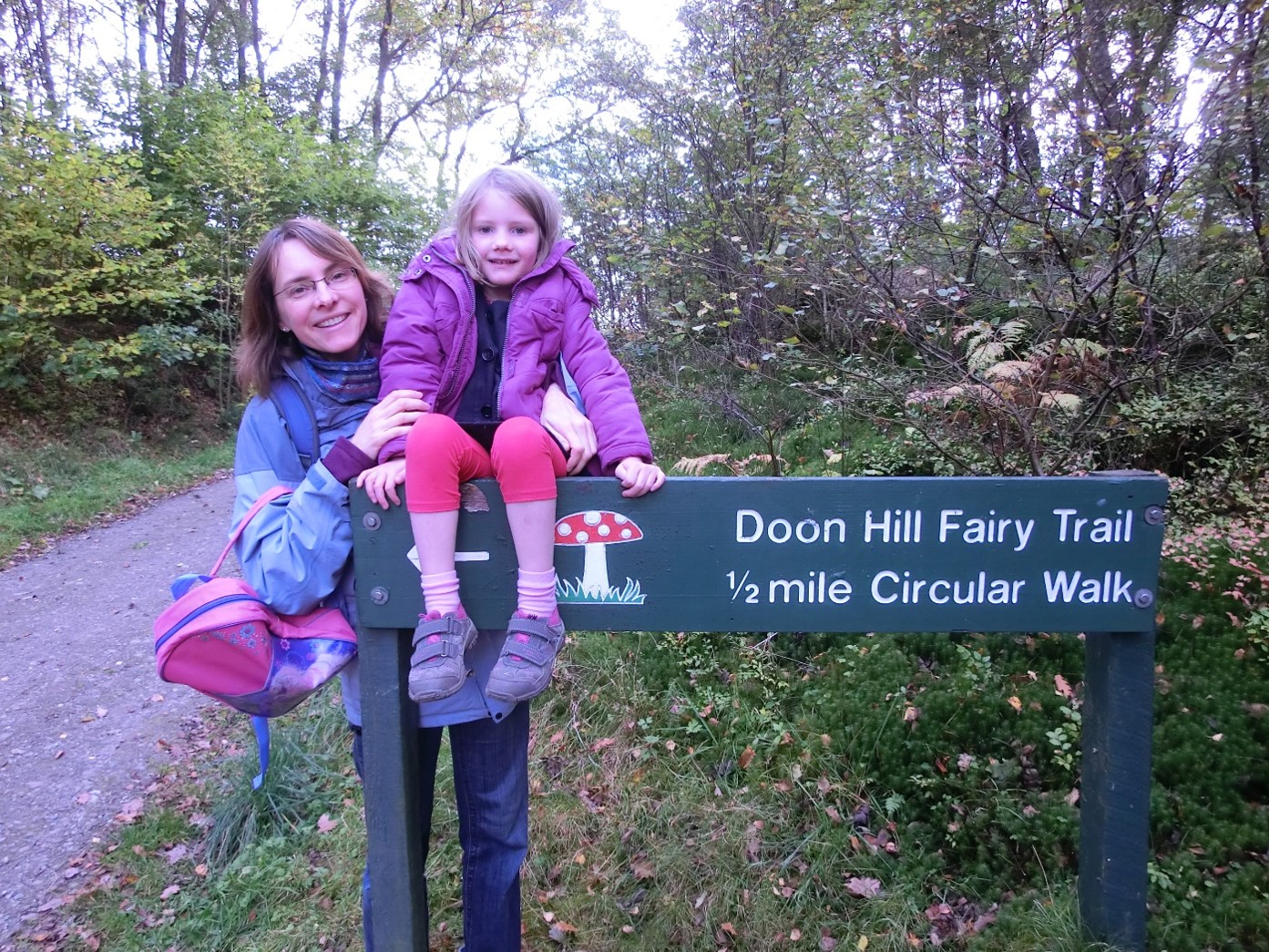
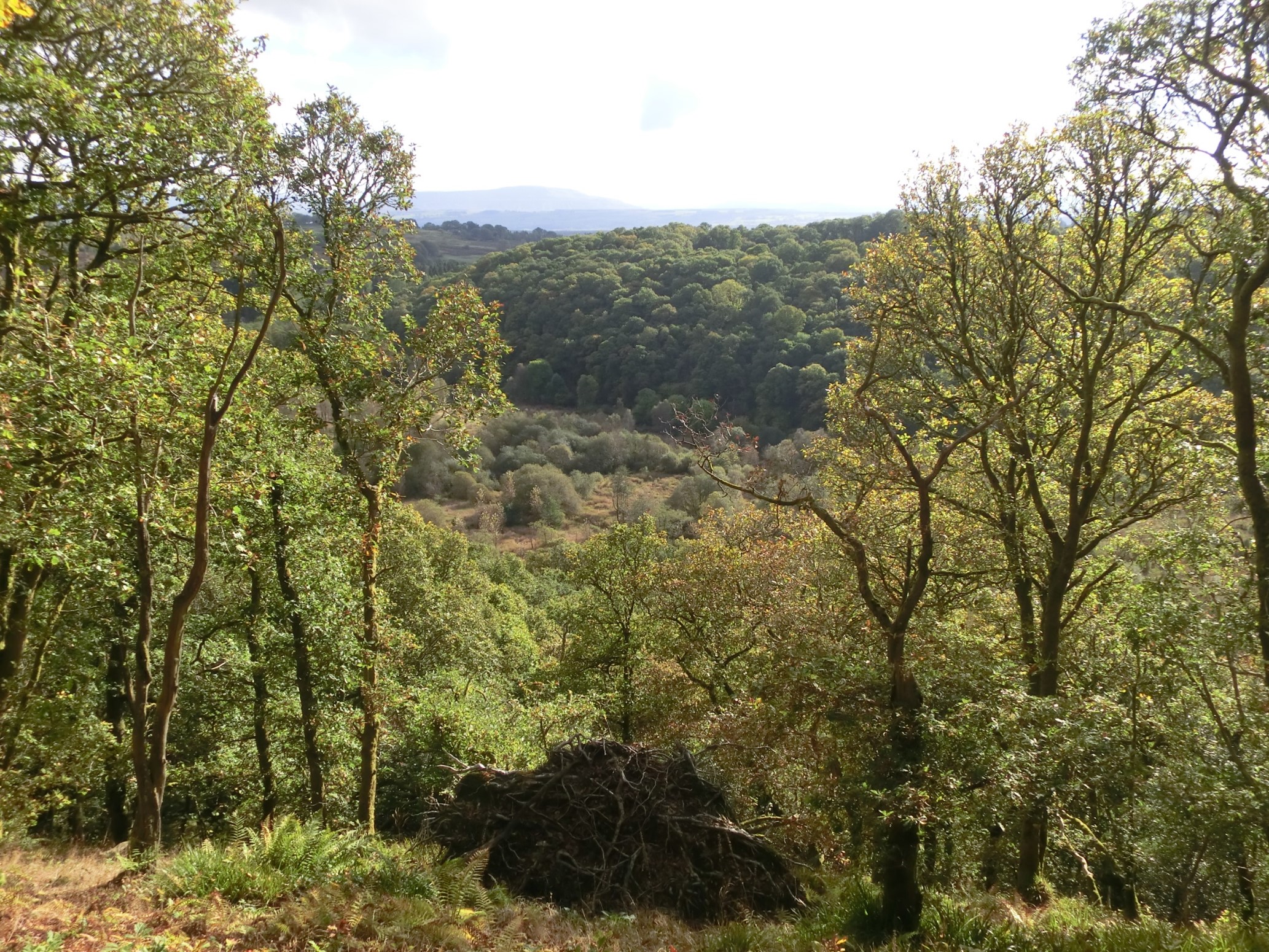
On a recent expedition, we decided to explore Doon Hill; my daughter Zoe being especially keen to catch a glimpse of the Little People.  An attractive, but low-key, “Fairy Trail” (with appropriate Fly Agaric mushroom logo) winds slowly around the flanks of the hill through beautiful birch and oak woodland to reach the summit where Kirk’s legendary Fairy Tree stands. Typical of Scottish Atlantic oak woods, there is a rich and diverse understorey of mosses, lichens and blaeberries. Gaps in the woodland provide tantalising views out across the surrounding landscape.

Picture4

Forest Floor – rich understorey of the mixed oak and birch woods


Picture5

The view South East from the Hill


Picture6

Rough Trail – circumnavigating the Hill

The summit of Doon Hill is a peaceful though somewhat mysterious place. Kirk’s old pine tree and many of the surrounding trees are draped in strips of coloured cloth or “clooties” which have been left by previous visitors to the Hill. The tradition of “clooties” goes back a long way in Scotland to pre-Christian times; around the Black Isle and the Moray Firth particularly, are several ancient clootie wells which are reputed to have healing properties. The strips of cloth or clothing bear wishes for the fairies or local deities and often include hand written notes bearing specific requests for help.

Picture7

Lone Pine – Reputedly Kirk’s spirit is tripped within the tree

It’s quite fascinating and touching to read through the many hand written messages which include greetings for loved ones, friends or simply for the Little People themselves. Some messages are quite sad and beg for help for sick siblings or ill pets; others merely make requests for Christmas gifts from Santa or for nice summer holidays. One or two ask the fairies to pass specific messages on to departed loved ones including grannies, grandpas or cherished family pets.

Picture8

“Clooties” – Strips of cloth bearing wishes for the fairies


Picture10

Wishing for Scotland

There are also some more “new agey” style greetings composing of ribbons and Tibetan prayer flags with references to various meditation, holistic healing and Buddhist retreats. It struck me that perhaps this place is not too different from sacred trees or wells that I have seen in other parts of the world, including in Nepal, where local trees are often venerated and protected as the abode of resident spirits and deities. Dotted around the various tree stumps and behind stones, numerous small shrines have been established with cuddly toys and fairy memorabilia in various states of composition and return to nature.

Picture11

Ribbons in the wind


Picture13

Forest Friend finds a home


Picture14

Fairy shrine

Despite the enduring legend of Robert Kirk, “fairy tourism” on Doon Hill remains low-key and uncommercialised. The site is well managed and cared for. So far there are no “fairy” cafes, turnstiles, souvenir stalls or multi media interpretation centres to spoil the peace or rake in tourist revenue; hopefully things will remain this way.

And so, after our kids had left their own little gifts for the fairies (biodegradable materials only !), we headed back down the trail to return to the realm of the mere mortals. As for Robert Kirk and his fairy encounters; who will ever know the truth about what he  really saw and experienced ? How much of this was a product of his own imagination or (fly agaric induced) delirium ?

…but then again who says there is no such thing as fairies ! (oh yes there are… !)

Picture12

Dusk falls across Doon Hill


Posted in Family, History & Culture, In Scotland, Trees & Greenspaces, Wild Places | Tagged , , , , , , , , , , , , , , , , , , , , , , | 2 Comments

Summer on the Schöttlkarspitze

Nights are drawing in and the first serious gales and rain of autumn announce that winter is not too far around the corner. Although there has been a bit of an Indian summer here, in general July and August were pretty unsettled months here in this corner of North West Europe. We made our annual pilgrimage to the Alps and managed to snatch a few good, fine days in between the wet ones. The highlight however for me was surely climbing the peak of the Schöttlkarspitze (2050m), a lofty vantage point high above the Isar Valley and favourite of haunt of King Ludwig II of Bavaria.

I set off with Sophie (a family member from Karlsruhe) on a beautiful morning from the alpine village of Krün, crossing the river Isar over the walkers bridge and heading up through the thick spruce forest towards the Schöttlarkarspitze. The Soiernseen, two stunning Emerald lakes located below the peak, were our first objective. This was a popular haunt of King Ludwig II and it was here that he constructed a mountain hut called the Soiernhaus in 1870, on a site overlooking the lakes.

CIMG6996

The Soiernhaus is now used as a walkers refuge. I’d once tried to get there a few years ago but retreated after an attack of vertigo on the notorious Lakaiensteig, a treacherous traverse constructed by Ludwig to allow his servants  quick access to the hut (to get the dinner on !). This time however we were prepared and I avoid taking the turn off for the “Steig” at Fischbachalm, favouring instead the main path. We made good progress and were soon sitting on the terrace of the Soiernhaus, overlooking the lakes and enjoying a welcome “pint” of Radler to rehydrate.

CIMG6997

Ludwig, with his wayward and bohemian lifestyle, has been described as somewhat of the Michael Jackson of his day and his time spent at the Soiernhaus was no exception to this. The eccentric monarch set up a floating stage on the upper lake for theatrical productions and firework displays and he spent many moonlit nights there rowing around the lakes in specially imported dragon boats. In particular Ludwig was a big fan and patron of the composer Wagner and he no doubt viewed the Soiern lakes as the perfect backdrop for operatic performance.

Refreshed after a brief stop at the Hut, we headed off up the steep trail towards our goal of the Schöttlkarspitze summit. The trail becomes increasingly steep with a few short exposed sections. After a tough grind up the slopes we were soon on the narrow summit ridge with tremendous views opening up in all directions, including to the Zugspitz, (Germany’s highest peak at nearly 3000m), the brooding limestone Karwendel Alps, the Starnberg lake, the Walchensee and the distant snowy peaks of Tyrol South of the Inn valley.

CIMG7000

CIMG7007

After a few short scrambles over loose boulders we soon reached the summit itself and took time to enjoy the fabulous panorama. It was the view here that also attracted King Ludwig and he even had a pavilion constructed here so he could enjoy his tea and quiet evenings amidst the solitude of the mountains. The so-called “Belvedere” was burned down in the 1930s and now only the small platform which it occupies now survives on the precipitous summit.

CIMG7013

Shortly after our arrival on the summit, two thrill seekers appeared from apparently out of nowhere, carrying mountain bikes and started to get ready for a daredevil descent of the ridge. Donning knee pads and helmets (and taking the air out of their tyres to increase friction) they were soon ready and set off slowly and painstakingly downhill with an appreciative audience fixated on their every hop, skip and treacherous move; indeed one miscalculation and they would be hurtling over the precipice and into the abyss. I was pretty gob-smacked with this amazing bit of precision biking (though having since seen stunt cyclist Danny McAskill’s film the “Ridge”, I realise this is pretty tame in the world of extreme downhill mountain biking !).

CIMG7022

Devoid of MTBs (thankfully !) and with slightly less of a lemming instinct we gingerly picked our way back down the narrow summit ridge before heading down the long winding trail passed the lakes. It wasn’t long before we were descending through colourful alpine meadows and wood pastures toward the Heidi style Fischbachalm where we stopped off for more refreshments (Kaffee und Kuchen)  in a cosy mountain café which offers a remarkably diverse and good value menu. Exhausted mountain bikers and trekkers chill out there amongst equally lacklustre cows, their bells tinkling jovially through the meadows.

CIMG7025

CIMG7028

CIMG7030

CIMG7039

CIMG7034  CIMG7043

CIMG7046

The final stage down through the woods to Krün was a hard plod but there was much beauty amongst the spruce and pine trees, including an exceptional variety of mosses and lichens on the forest floor and an eclectic array of day-glow fungi clinging to deadwood piles. Unlike forests in many other countries (including some in Scotland), these forests are managed sustainably with virtually continuous cover of trees throughout the woodland. Younger trees are encouraged through the process of natural regeneration and these are then able to fill the gaps left in the canopy when the taller trees are felled for timber extraction. I also loved the numerous neat, little stacks of firewood dotted along the side of the track, which also provided a micro habitat for fauna and flora.

CIMG7053

CIMG7060

CIMG7061

CIMG7054

As dusk approached, a fine iridescent mist hung over the Isar Valley lit by shafts of low level sunlight. Views opened out to the distant peaks of the Wetterstein range and the Zugspitz. The sun went down, leaving an eerie and atmospheric alpenglow which  illuminated the landscape of forest, hills and distant peaks. As we looked out across the village of Krün, the welcoming  lights of inns and holiday chalets twinkled invitingly in the gathering gloom, heralding our return home.

CIMG7071

CIMG7098

CIMG7101

Although the ascent of the Schöttlkarspitze was the literal high point of the summer, we enjoyed another ten days or so in the Karwendel Alps, albeit in fairly mixed weather. Despite this we were able to go swimming in the beautiful Barmsee (a favourite spot) and make many excursions on  mountain bikes along the Isar Valley which is great cycling territory.

CIMG7139

CIMG7188

I’d also read that the descent of the river Isar by canoe from Krün to The Sylvensteinstausee made for a great excursion and with this in mind I’d brought my touring kayak from Aachen. The problem was when we first arrived that the river looked frighteningly high for an attempt due to heavy summer rainfall over the headwaters in the Karwendel mountains. Concerned about the danger of being caught by submerged obstacles and overhanging trees, I delayed the voyage until water levels had subsided to what I deemed to be a safe level. At last the day I arrived and with a tinge of excitement I hauled my boat into the water at Krün and set off downstream; no more ranging torrent, however, I still got more than I bargained for !

Initially, the experience was fun; though the channel was narrow in places and a little bit of a scrape at times. Continuing down below the bridge after Wallgau however, the water level dropped significantly as the stream bed widened out over large expanses of gravel. I had to get out the boat more and more frequently and wade sections of river, hauling the canoe behind me. Finally rounding a corner, the Isar all but disappeared under the gravel, leaving a meagre and unnavigable trickle in its place. This was a problem I had not envisaged; from raging torrent to mere trickle over just a few hours (The problem largely being the result of water abstraction for hydro power upstream from Krün and the diversion of much of the Isar’s flow into the Walchensee).

There was no option but to abandon the voyage, requiring an awkward and exhausting portage to the nearest road. This literally meant hauling the boat through a dense thicket and up a steep wooded bank; no mean feat it turned out. From there I was able to summon Martina and the kids (my back up crew) who found me dishevelled, scratched and licking my wounds by the roadside.

CIMG6970

I decided to give up on the Isar after this and headed for the Walchensee later that day, one of Bavaria’s largest and least commercialised lakes which is set amidst a fantastic backdrop of peaks. The Walchensee experience, happily, more than made up for the disappointment of the disappearing river Isar and I enjoyed an invigorating paddle around the lake in the super afternoon sunshine while Sophie with my daughter Zoe bravely went for a swim (it’s not so warm). Later on we took another trip with my 4-year-old son Kai as a passenger who seemed quite unphased and at ease with the whole adventure.

CIMG6980

CIMG7198

Being a visitor in Bavaria though also means finding time just to chill out and enjoy some of the fine hospitality on offer. There is not much better than sitting outside at a local restaurant and taking time to enjoy the local cuisine amidst the beautiful landscape of forest-clad hills. Our kids also got into the spirit of things and went native in dirndle and lederhosen. They were very proud but I haven’t seen these being worn lately in Aachen.

All too quickly though, it was time to head back North and to pick up the normal routines again. Already I’m looking forward to my next visit which can’t come too soon.

CIMG7248

CIMG6972

CIMG7254

CIMG7273

CIMG7262

Posted in In Europe, Mountain Treks, Wild Places | Tagged , , , , , , , , , , , , , , , , , , , , | 1 Comment

Caribbean Colours of Scotland’s Wild West

On my wall hangs a picture by Scottish landscape painter John Lowrie Morrison, showing a brilliant white shell sand beach washed by a sea of aquamarine and turquoise. Although almost childlike in character, the picture buzzes with latent energy, the brooding peaks of distant Rhum suggesting an incoming storm on the way. Visitors are surprised when I point out that this is a picture of Scotland and not St Lucia or Turkey’s Lycian Coast; after all, surely it always rains in Scotland, doesn’t it ?

DSCN2310

The brilliant colours of Scotland’s West coast are one of the country’s greatest surprises for visitors; one minute you can stare out across a steely, cold sea under a gun-metal grey sky; however, wait five minutes and the whole landscape comes to life as the sun bursts through. The whole scene is dynamic and tactile in a way not found often in Continental Europe.

DSCN2314

Nowhere illustrates this more than the magical Isle of Iona, an island jewel to the West of Mull, pounded by Atlantic breakers and inextricably linked with the life of Saint Columba. Columba founded a Celtic monastery on the Island in AD563 and introduced Christianity to much of Scotland. Later, Iona became the chosen destination of artists, most notably the renowned Scottish Colourist painters, including Cadell and Peploe, who were attracted to Iona by the intense colours, the clarity of light and the superb natural setting of the Island.

DSCN2336

DSCN2361

As a result of Columba, Iona became one of the most significant religious centres in Western Europe. As many as 48 early Scottish Kings are reputed to be buried in the churchyard, along with kings from Norway, Ireland and France. Although this is sometimes disputed, the burial ground was certainly significant for the Lords of the Isles and Chiefs of the Clan Macleod. The fabulous Book of Kells was also scribed on Iona by monks before being taken to Ireland for safe keeping from Viking raids.  The Abbey was significantly restored during the 19th Century but has still managed to retain much of its early Celtic Christian character.

DSCN2325

DSCN2370

DSCN2371

The sheltered Eastern side of Iona, where the Abbey and the majority of houses are located, receives the bulk of visitors to the Island. Most days there is a surge of visitors around lunchtime when tourist buses disgorge day trippers eager for a quick visit to the Island. On the whole though, Iona feels remarkably peaceful with the wild Western, Atlantic facing coast offering the greatest solitude and most spectacular scenery. The short walk over to the West coast provides breathtaking views out over a myriad of small islets, with a huddle of perfect secluded bays and white sand beaches tucked away amongst the rocky coastal terrain. If you’re lucky (as I was) you might even see a school of bottlenose dolphins making their way around the headlands, leaping gracefully out of the water just to add to the spectacle.

DSCN2437

DSCN2445

DSCN2446

From Iona, it’s possible to get a boat out to the Island of Staffa, made famous through Mendelsohn’s “Hebrides” overture, which the composer wrote following a visit  in 1830. Staffa is a wonderful, rugged island perched right on the very edge of the Europe. The remarkable, hexagonal basalt columns, echo the structure of the Giant’s Causeway over the Irish Sea in not-too-distant County Antrim. The Cave has been gouged out by wave action through the millennia to create its present unique form. In Celtic myth Fingal’s Cave is linked with the legendary Irish Warrior, Finn MacCumhaill who lived around 250AD. It’s possible to enter the cave on foot, an experience described by Sir Walter Scott as,

“…one of the most extraordinary places I ever beheld. It exceeded, in my mind, every description I had heard of it …composed entirely of basaltic pillars as high as the roof of a cathedral, and running deep into the rock, eternally swept by a deep and swelling sea, and paved, as it were, with ruddy marble, baffles all description.”

DSCN2376

DSCN2378

DSCN2384

DSCN2391

DSCN2393

DSCN2420

DSCN2407

DSCN2402

Standing right on Staffa’s highest point really does feel like being on the edge of the World; the perpetual motion of ocean currents and tides, the cry of seabirds, the smell of salt spray and shimmering reflected light casting a potent spell. However the boat will not wait forever; the long trip back to Iona and then across the Island of Mull towards the Scottish Mainland awaits. I was glad I made the trip though to this truly remarkable outpost of Scotland.

DSCN2410

DSCN2454

DSCN2473

Posted in History & Culture, In Scotland, Wild Places | Tagged , , , , , , , , , , , , , , , , , , , , , | 1 Comment

Charlemagne’s Warriors

A haunting spectacle could be viewed in recent days behind Aachen’s ancient octagonal cathedral; ranks of solemn, stately figures could be seen lined up in neat rows, oddly reminiscent of the terracotta Emperor’s Warriors or the Lewis Chessmen. The figures celebrate the 1,200th birthday of Charlemagne, the Dark Age ruler who founded an Empire covering much of the area of modern Western Europe.

IMG_5472

Charlemagne (or Charles the Great) created his ancient capital in Aachen where thermal springs provided some degree of relief from chilly Dark Age winters. The Cathedral (or Dom) is the best surviving part of Charlemagne’s mighty palace complex which, at one time, formed the most impressive structure to the north of the Alps. The Dom contains some remarkable treasures including an imposing stone throne which was used for the coronation of over 30 German kings.

IMG_5470

IMG_5468

Posted in Aachen & Euregio, History & Culture, In Europe, Urbanism | Tagged , , , , , , | Leave a comment

Bernkastel Kues

We spent Easter around the little historic wine town of Bernkastel on the middle Moselle. I love the town’s ancient little market place, (very reminiscent of “Trumpton”) along with its winding streets and leaning half-timbered houses. The steep South and SW facing slopes produce some of the region’s finest grapes for quality wines including the famous Bernkastel “Doctor”. The surrounding woodlands and meadows provide great nature spotting opportunities with extensive views over the river valley. We spent a great few days and found lots of interest within just a few square kilometres.

IMG_5518

IMG_5548

IMG_5551

IMG_5579

IMG_5581

IMG_5582

IMG_5588

IMG_5589

IMG_5593

IMG_5623IMG_5684


Posted in History & Culture, In Europe, Trees & Greenspaces, Wild Places | Tagged , , , , , , , , | Leave a comment