
Oh England, please forgive me ! I’ve just realised that after 12 years or so of writing this blog, that I’ve never mentioned your “green and pleasant” land before; not even once ! Of course, we Scots know only too well (though would never openly admit it), that not every corner of England is completely smothered by decaying red-brick terraces, desolate agribusiness, bland retail parks, gridlocked motorways and soulless dormitory towns. Indeed, many of us do even realise that beauty can also be found to the south of the Scottish Border on occasions 🙂 Just think, for instance, of the obvious charms of the Lake District, the Yorkshire Dales or the West Country for example.
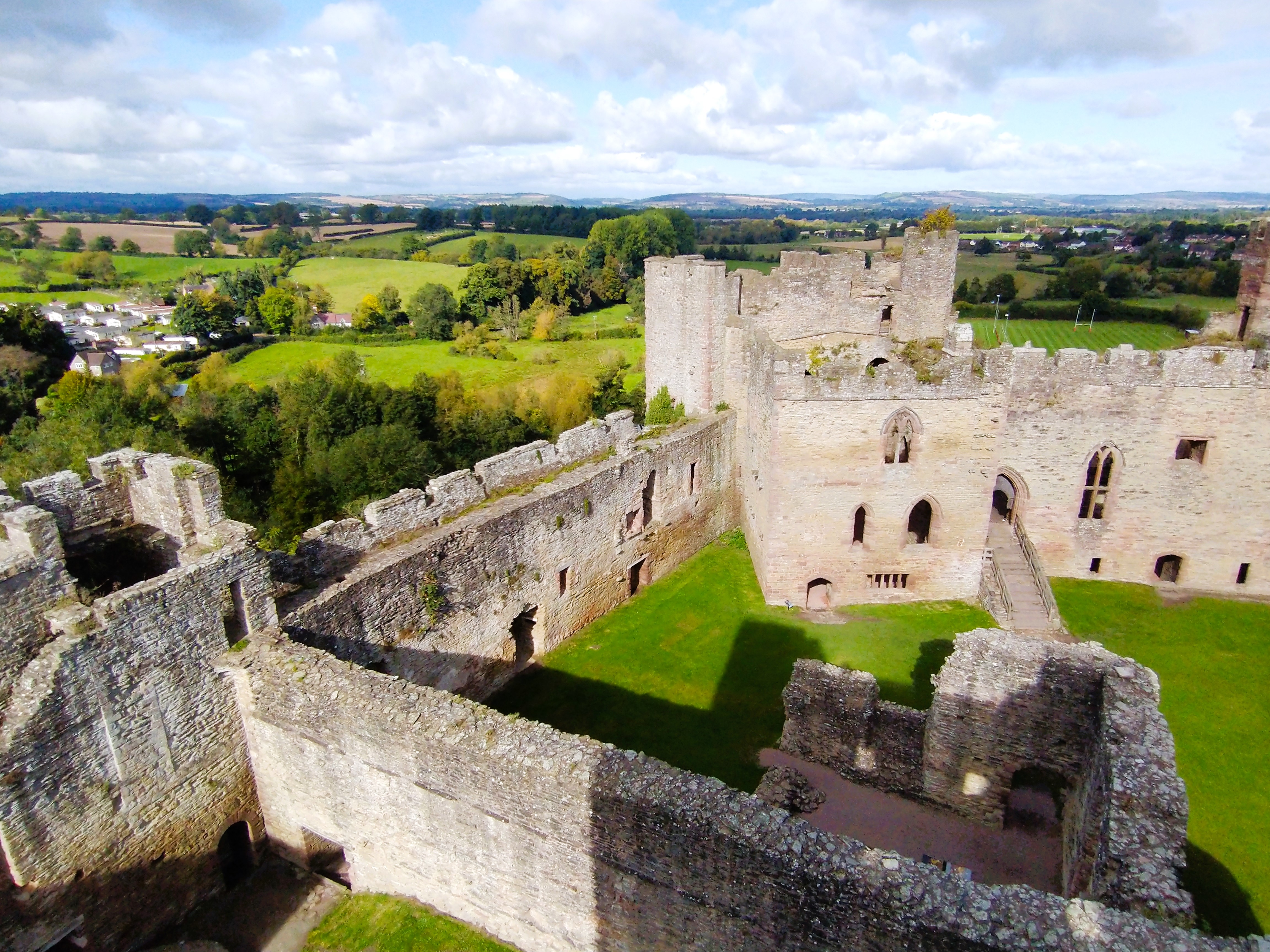
Many years ago, I was lucky enough to work for a while in one of England’s more pleasant corners, in the County of Herefordshire; a wonderful, forgotten, little part of England, tucked away tightly against the Border with Wales to the west of the Rivers Wye and Severn. For me Herefordshire was a cosy and reassuring place; a land of ancient woodlands, tall hedges, twisting lanes, half-timbered village houses and traditional country pubs with welcoming log fires; all hidden away amongst green, rolling hills – indeed, the sort of place you might easily imagine bumping into a hobbit, a wandering wizard or even a stray medieval knight on your way back from the pub some evening (though perhaps that’s just an effect of the County’s potent local cider).
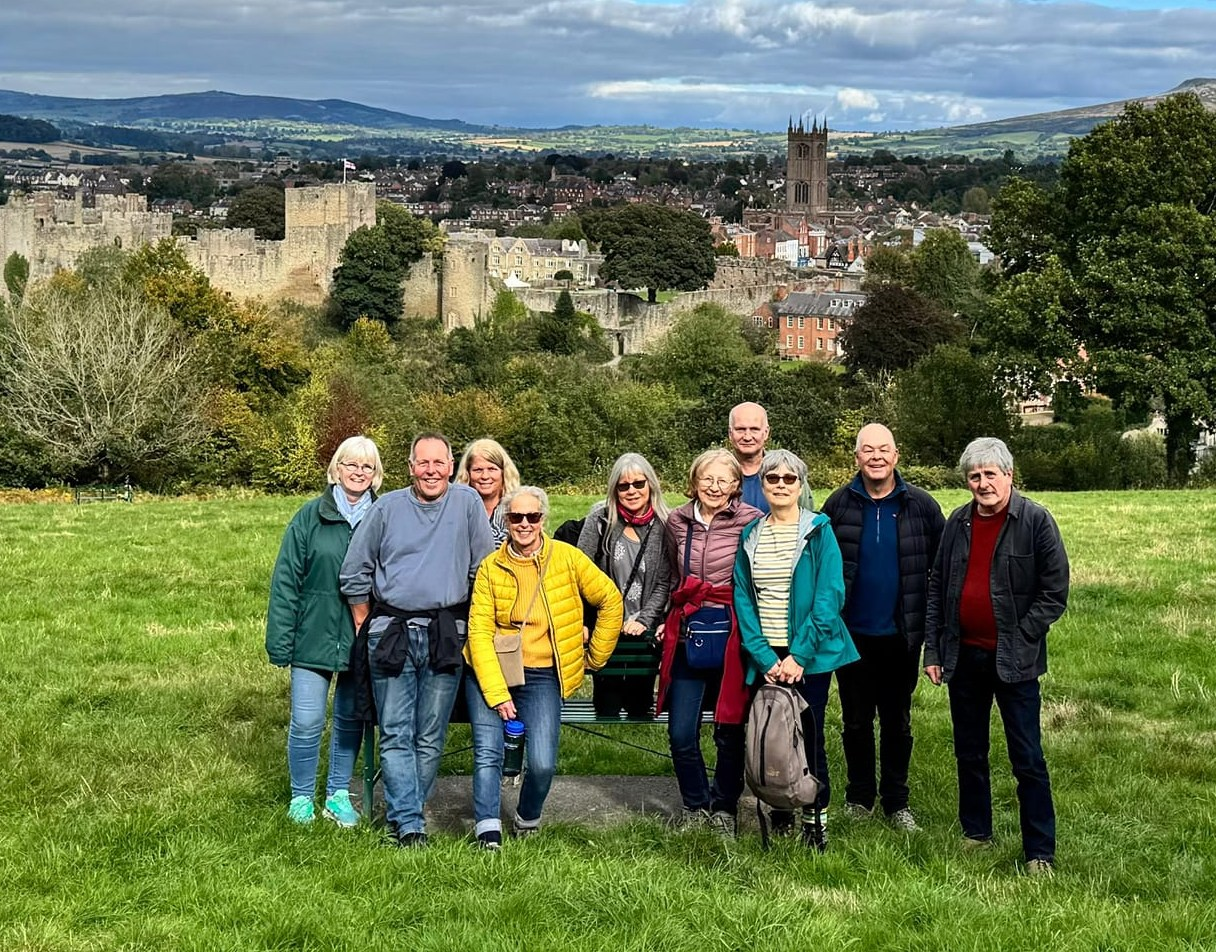
Recently I was fortunate enough to revisit the Welsh Borders again; albeit only for a fleeting weekend trip to meet up with some old friends from my VSO days (though VSO actually took us much further afield, to the Himalayan Kingdom of Nepal). Sadly, this time around though, I didn’t make it to Herefordshire (or to Nepal either for that matter), but stayed just over the border in the neighbouring county of Shropshire. Here, I spent a couple of days in Ludlow, an ancient small town considered by many as being one of England’s most beautiful historic settlements.
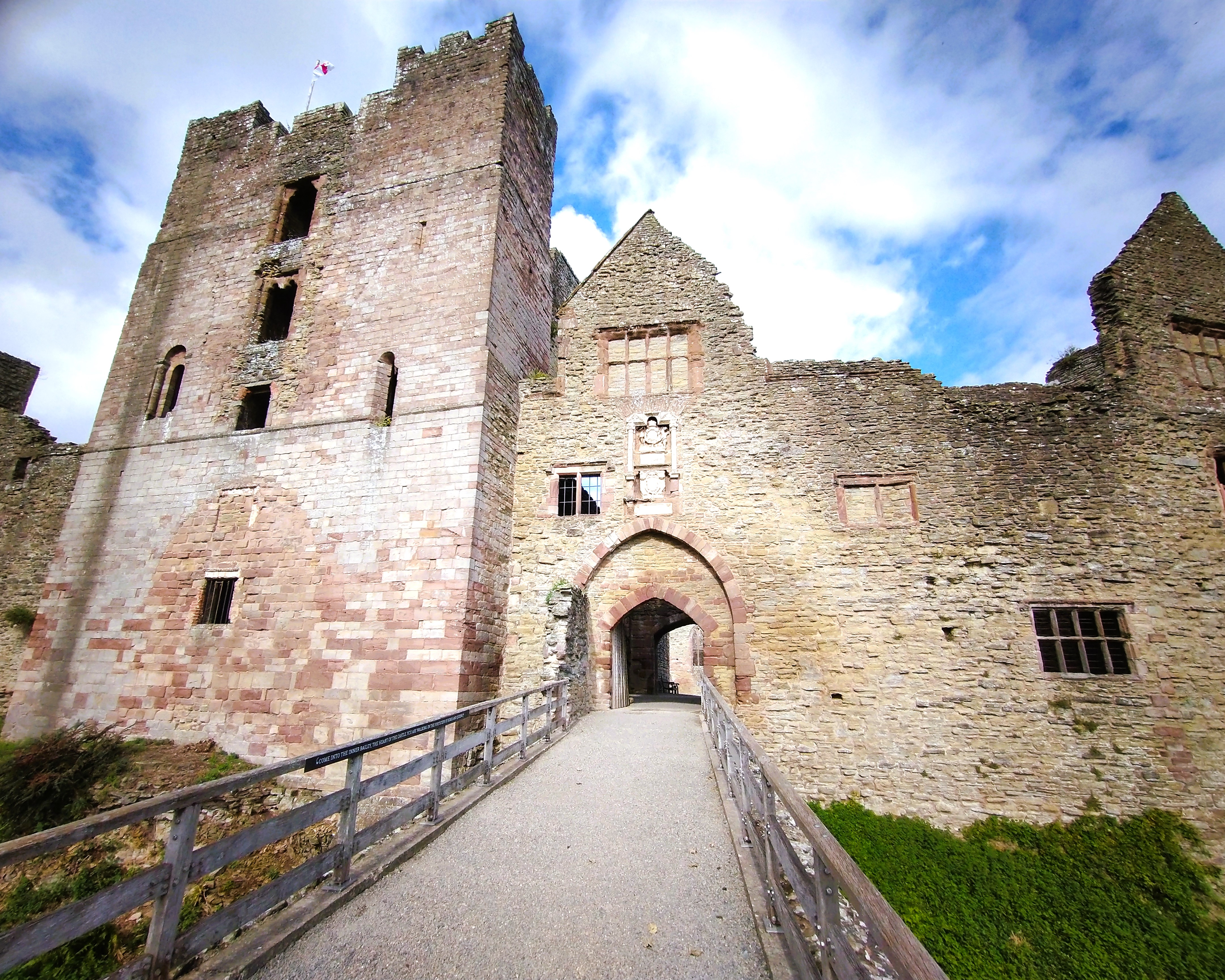
Ludlow is indeed a wee historic gem of a place and (without wanting to sound pretentious) it’s really the quintessential English market town. It is dominated by it’s stunning 11th Century Norman Castle, which is located on a commanding hilltop above the valley of the winding River Teme and overlooking miles of beautiful Welsh border countryside. The earliest parts of the castle were constructed by the De Lacy Family who retained the Lordship until the 13th Century. It was later expanded and modified throughout the Middle Ages and into the Tudor period.

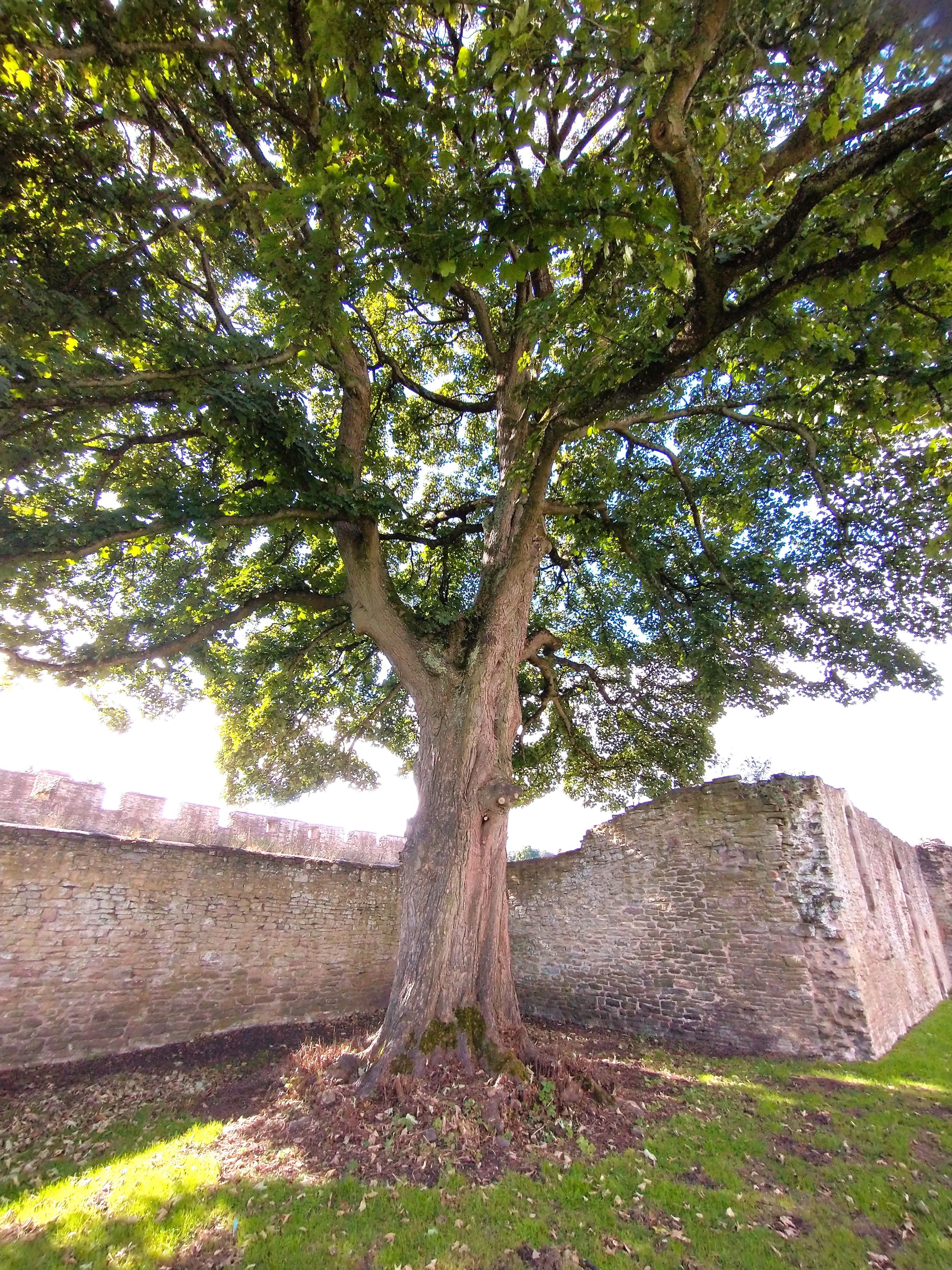
As well as the castle, the magnificent medieval Church of St Laurence’s is another major landmark which is well worth a visit for its beautiful carved choirstalls, translucent stained glass windows and its airy nave. St Laurence’s even features a coffee shop these days which provides a relaxed spot to unwind with a cappuccino whilst contemplating the meaning of life and the spacious interior of the church. It seems that even the church has to look at diversification and entrepreneurship these days to stay afloat; in Ludlow it works apparently !


Adventurous visitors with a head for heights can ascend the 200 or so steps to the top of the tower. We picked up the key from a couple of enthusiastic older ladies who escorted us to the tower and then, reassuringly, locked us in behind a heavy oak door, explaining it was easily opened again from the inside. After negotiating the narrow spiral staircase (and fortunately encountering no large people coming the other way) and passing by the impressive belfry, we emerged into the daylight again to be rewarded with fabulous views out over the the town’s market square, the planned network of old streets and a terracotta roofscape of historic houses and impressive civic buildings dating from across the centuries. In the distance, the view is framed by the wooded hilltop to the Mortimer Forest to the West and the intriguingly named Titterstone Clee Hill to the North East. This is an ancient border landscape of iron age hillforts, old orchards, lost villages, patchwork fields and long forgotten industries such as iron ore production and mining.

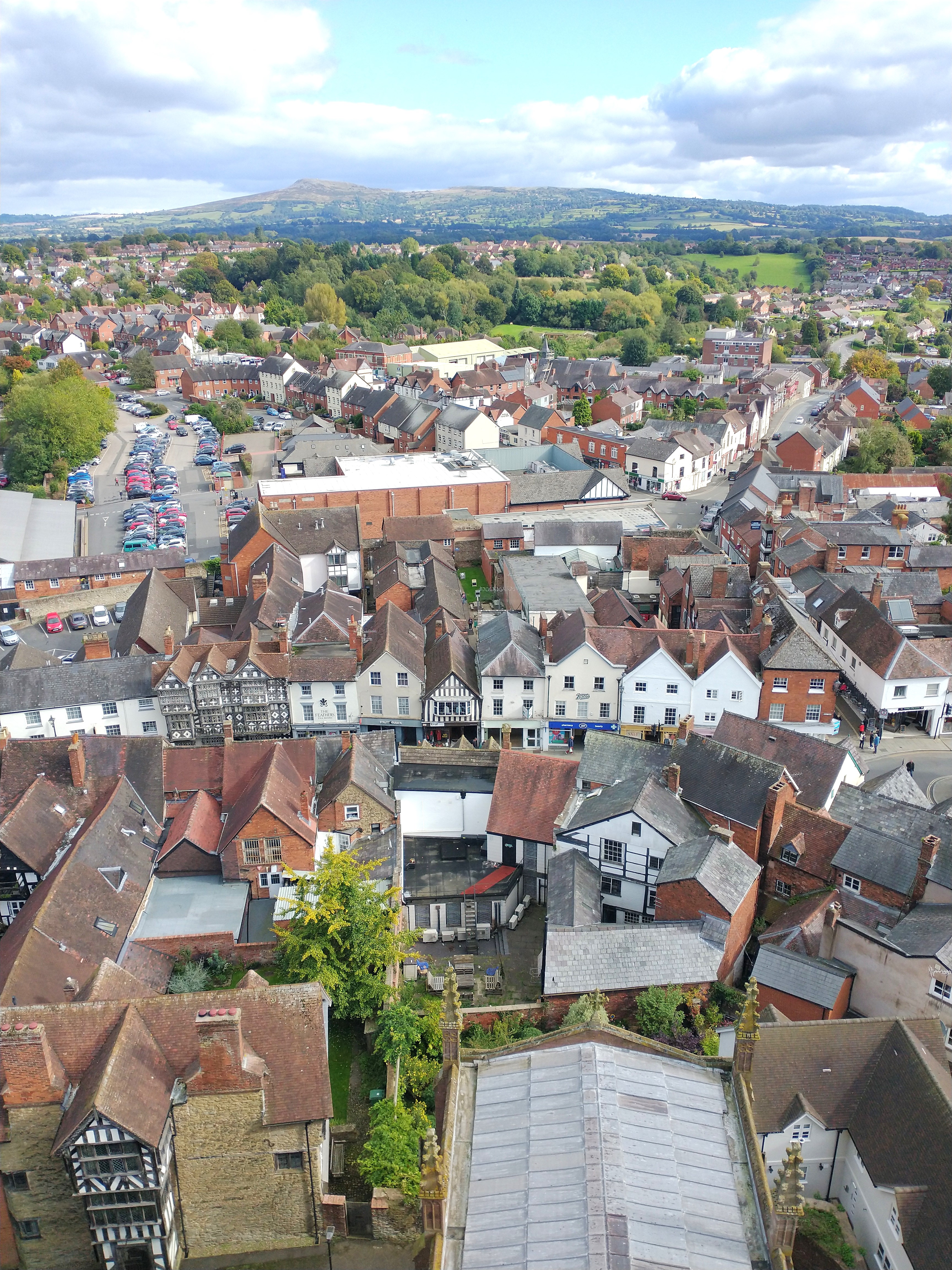
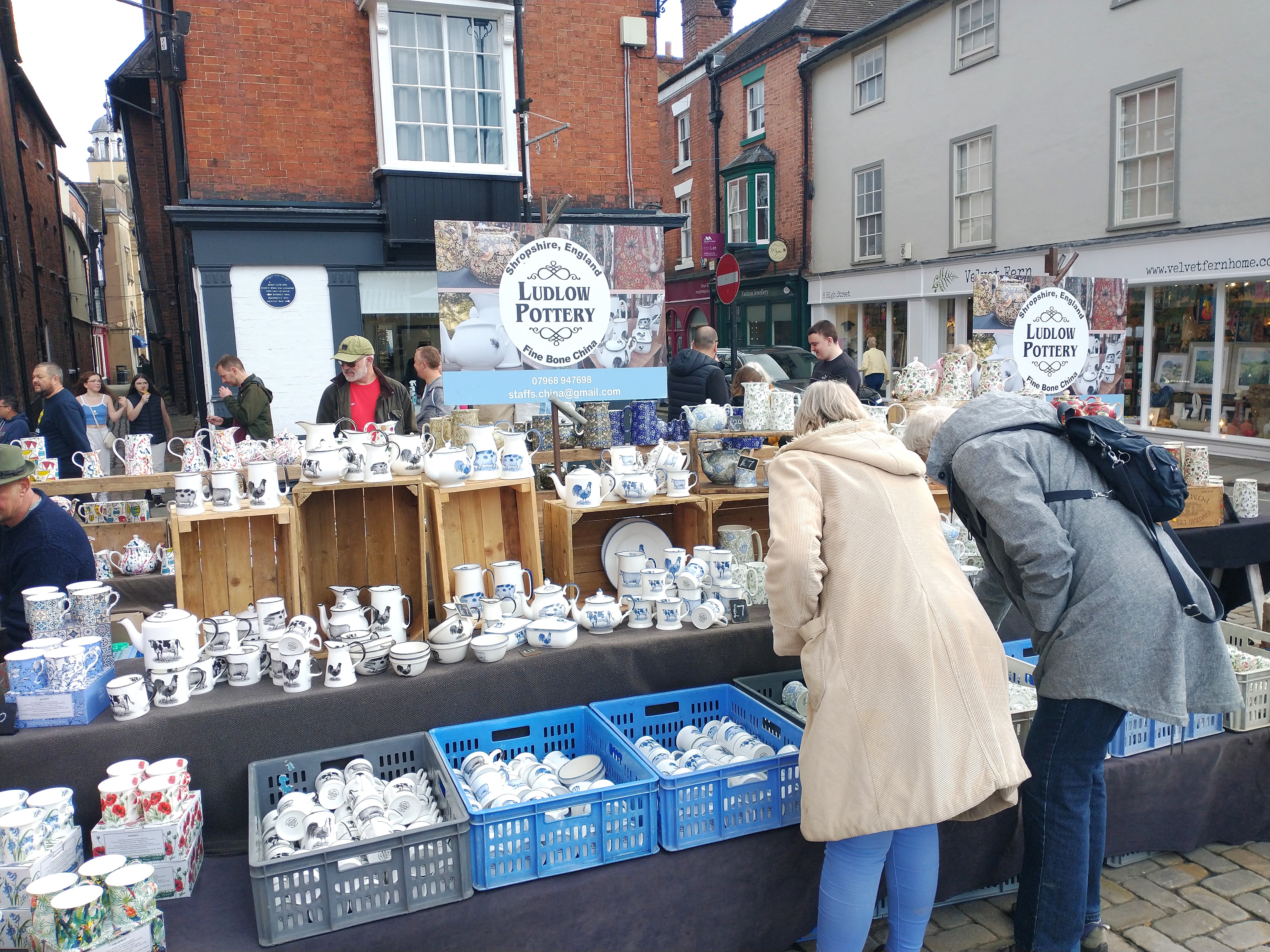
Despite all this sheer weight of history, Ludlow still manages to be a vibrant and energising place. The town boasts lively and colourful street markets selling local produce, diverse independent shops, local food festivals, a dynamic arts scene and an eclectic assortment of cafes, restaurants and pubs which might be the envy of many larger places.
In essence, Ludlow seems like it’s a thriving community with a lot going on; in this respect, it’s bucking the trend in our times of empty high streets, internet shopping and soulless retail parks. Perhaps other small towns can learn a lot from Ludlow, though few places are blessed with such a wonderful setting and a sense of history. Hopefully I’ll get back again some time soon, not forgetting to stop off in Herefordshire next time of course !
So England, I hope I’ve finally set the record straight for now. You really are a “green and pleasant land” – well in parts at least 🙂

 Off the Beaten Track